
Quick Answer:
Most babies only need baby shampoo 2 to 3 times per week. Newborns under 6 weeks often need only plain warm water on their scalp unless there is visible buildup. Daily shampooing is usually not needed because a baby’s scalp can dry out easily.
How often should baby shampoo be used for babies? Newborns generally need shampooing just 2-3 times per week, since their skin and scalp don't produce excess oil daily. Over-washing can dry out delicate baby skin, so using a gentle, tear-free baby shampoo at the right frequency helps maintain natural moisture balance.
If you are a new parent, you are likely navigating an endless stream of advice about your baby’s care. One of the most common questions we hear is: How often should you actually use baby shampoo?
It feels like there should be a straightforward rule, right? But bath time can be tricky. You want your baby to be clean, but you also don’t want to strip their delicate skin of the natural oils it needs to stay healthy.
In this guide, we will break down exactly how to manage your baby’s hair care routine, why "less is more," and what the current medical research says about keeping your baby’s skin healthy and happy.
Why Babies Don’t Need Shampoo Every Day
To understand why daily shampooing is usually unnecessary (and potentially harmful), you have to look at biology.
Adults have active sebaceous glands. We produce oil (sebum) throughout the day, which picks up dirt, dust, and environmental pollutants. That is why we wash our hair frequently. Babies, however, are different.
Their sebaceous glands are not fully active yet. Their scalp produces very little oil, and they aren't exactly doing hard labor that would cause them to sweat heavily.
According to research published in MDPI’s Pharmaceutics, a baby’s skin barrier is still developing after birth, so their scalp can lose moisture and become irritated more easily than adult skin.
When you shampoo too frequently, you are stripping away the limited natural oils that protect this developing barrier. This can lead to:
- Dryness and flakiness: The scalp becomes tight and itchy.
- Eczema flare-ups: If your baby is prone to sensitive skin, harsh soaps can trigger inflammation.
- Disrupted pH balance: Baby skin is slightly acidic. Many adult shampoos (and even some harsh baby products) are too alkaline, which disrupts the protective "acid mantle" of their skin.
Can Hard Water Affect Baby Hair Washing?
Hard water (high in minerals) can leave a sticky residue on hair, making it look dull even after washing. This isn't dirt, it's mineral buildup. If you have hard water, don't wash more often, as that worsens dryness. Instead, use a pH-balanced cleanser or install a simple faucet filter to keep your baby's scalp clean and residue-free.
Age-by-Age Washing Guide
Not all infants have the same needs. A newborn has very different skin requirements than an active 9-month-old who is starting to crawl.
1. Newborns (0–6 Weeks)
During these first few weeks, your baby’s skin is adjusting to life outside the womb. Their skin barrier is still "under construction."
- Frequency: You typically do not need shampoo at all for this stage.
- The Routine: A simple rinse with warm water during bath time is usually enough to keep their scalp clean. If you feel like they have a bit of lint or dust, use a soft, damp washcloth to gently wipe their head.
- According to Healthychildren.org, bathing your baby three times a week during the first year is generally enough as long as the diaper area, face, and skin folds are kept clean.
2. Older Infants (6 Weeks to 1 Year)
As your baby becomes more active and begins to explore, they might get a little messier.
- Frequency: 2 to 3 times per week.
- The Routine: This is the "sweet spot" for most infants. It is frequent enough to prevent buildup but infrequent enough to maintain moisture levels.
3. Toddlers & Beyond
Once your child is more mobile and spending time outdoors, they will naturally be exposed to more dirt, sweat, and environmental grime.
- Frequency: You can increase to 3 to 4 times per week, or daily if they have spent a day at the park or beach.
- The Routine: At this stage, you can be more flexible. If their hair looks oily or smells like the playground, it’s time for a wash.
Does Baby Hair Type Change How Often You Shampoo?
Yes. Fine, straight hair is delicate and easily weighed down, so a pea-sized amount of shampoo is plenty. Avoid heavy conditioning products.
For curly or coarse hair, prioritize moisture. These textures tend to be drier, so you might use a more hydrating cleanser or occasionally skip shampoo, opting for a gentle baby-safe detangler to keep curls soft and manageable.
Troubleshooting: What If Your Baby Has Specific Needs?
Sometimes, the "2–3 times a week" rule goes out the window because of specific skin conditions. Here is how to handle the most common scenarios.
Handling Cradle Cap (Infantile Seborrheic Dermatitis)
Cradle cap is extremely common. It appears as yellow, crusty, or scaly patches on the scalp. It is not contagious, and it is not caused by poor hygiene.
It is often linked to excess oil and normal yeast activity on the scalp. For this, the best option is to use baby shampoo for cradle cap.
If your baby has cradle cap, the guidance changes: you may need to wash their hair more frequently, sometimes even daily, to keep the area clean and help loosen the scales.
- Research-Backed Approach: For cradle cap, gentle washing and soft brushing can help loosen scales. If the scalp becomes red, inflamed, or irritated, parents should check with a pediatrician
- Pro Tip: Use a soft, rubberized baby brush to massage the scalp after applying the shampoo. This helps mechanically loosen the scales without damaging the skin.
- Further Reading: Check out the StatPearls review on Cradle Cap for a detailed clinical overview of how to manage the condition.
Dealing with Dry Skin or Eczema
If your baby has eczema or very dry skin, keep shampooing minimal and use only mild, fragrance-free cleansers.
- Frequency: 1–2 times per week is usually enough unless your pediatrician recommends otherwise.
- Important: Keep baths short, use warm water instead of hot water, and moisturize after bath time.
Ingredients: What to Look For (And What to Avoid)
Not all "baby shampoos" are created equal. Marketing can be misleading. Always flip the bottle over and look at the ingredient list, not just the front label.
Ingredients to Embrace:
- Aloe Vera: Soothing for the scalp.
- Chamomile or Calendula: Naturally calming extracts that are great for sensitive skin.
- pH-Balanced Formulas: Look for products that explicitly state they are pH-balanced (ideally around 5.5) to match the natural acidity of the skin.
Ingredients to Avoid:
- Sulfates (SLS/SLES): These create the "foaming" action that makes us feel like we are getting clean, but they are very stripping for baby skin.
- Synthetic Fragrances: These are a leading cause of contact dermatitis in infants.
- Parabens & Phthalates: These are preservatives that many parents prefer to avoid due to concerns about endocrine disruption.
2-in-1 Washes vs. Dedicated Shampoos
Newborns do great with 2-in-1 body-and- hair washes because they are convenient and gentle.
However, as babies grow, their hair naturally changes. Dedicated shampoos are often better for older infants because they handle environmental grime more effectively without being overly stripping. If your older baby's hair feels consistently tangled or dry, it’s a sign to switch to a specialized shampoo.
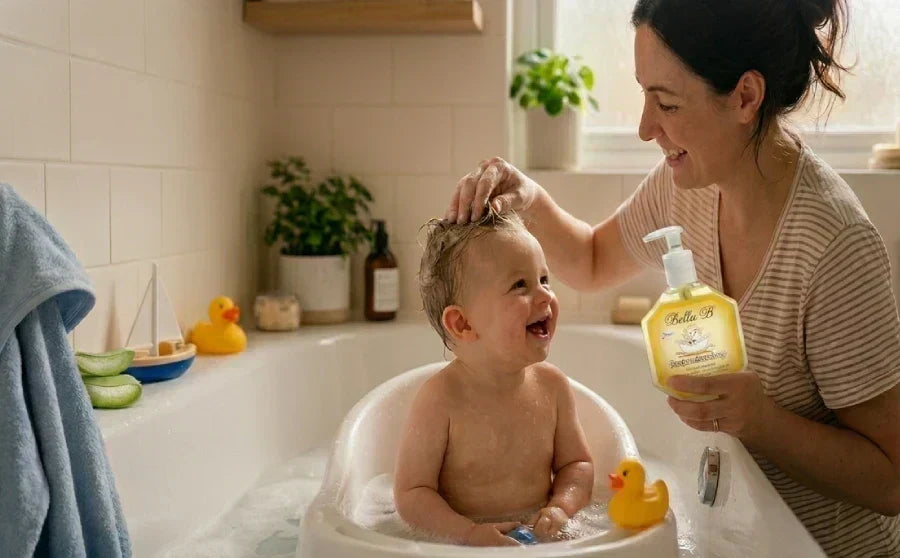
The "How-To": Safe Hair Washing Technique
Washing a wiggly baby can feel like a wrestling match. Here is a step-by-step process to make it easier for both of you.
- Preparation is Key: Have everything within arm’s reach before you put the baby in the tub. You should have your bubble bath, a small cup for rinsing, and a soft towel ready to go.
- Temperature Check: Always test the water on the inside of your wrist. It should be warm (around 37°C/98.6°F), never hot.
- The "Cup and Pour" Method: Don’t use a running faucet to rinse, as the sound can be scary for an infant. Use a small plastic cup to gently pour water over their head, shielding their eyes with your hand.
- Less is More: You only need a drop of shampoo about the size of a pea. Don't worry about creating a huge lather; the cleaning agents will work just fine without the bubbles.
- Drying: Pat the hair dry; do not rub it with the towel. Rubbing can lead to tangles and breakage, especially if your baby has delicate, fine hair.
What to Do After Washing Baby's Hair
After bath time, keep the scalp care simple. Avoid heavy oils or thick lotions unless your pediatrician recommends them, especially if your baby has cradle cap or irritation.
When to Call Your Pediatrician
While most scalp issues are normal, there are times you should seek professional advice. Reach out to your doctor if you notice:
- Signs of Infection: Any oozing, pus, or foul-smelling drainage from the scalp.
- Persistent Redness: If the scalp looks angry, raw, or if the cradle cap seems to be spreading to the face or ears.
- Hair Loss: While it is normal for babies to lose hair in the first few months, sudden or patchy hair loss should be checked by a professional.
Still Looking for the Right Product?
Once you’ve mastered the "how often," make sure you’re using the right "what." We’ve rounded up the mildest, most trusted shampoos to help you find the perfect, safe choice for your baby's delicate skin. [Read our detailed guide: The Safest Baby Shampoos for Sensitive Skin]
