
FEATURED ANSWER
When choosing baby wipes for sensitive skin, look for a gentle formula and a soft, thick wipe that cleans without requiring lots of rubbing. Fragrance-free and hypoallergenic options can be useful starting points for very sensitive skin, but always check the actual ingredients and pay attention to how your baby’s skin responds. If a wipe consistently leaves the diaper area red, dry, or irritated, stop using it and try a simpler option.
If you’ve ever stood in the baby aisle comparing three packs of wipes while your baby was already overdue for a diaper change, you know the problem. Every package seems to promise some version of gentle, pure, sensitive, or natural.
So which words actually matter?
The best baby wipes for sensitive skin aren’t necessarily the ones with the prettiest ingredient story or the biggest “natural” badge on the package. You’re looking for something much more practical: a wipe that removes the mess gently, limits unnecessary exposure to potential irritants, and doesn’t make you scrub delicate skin like you’re trying to get spaghetti sauce off a white countertop.
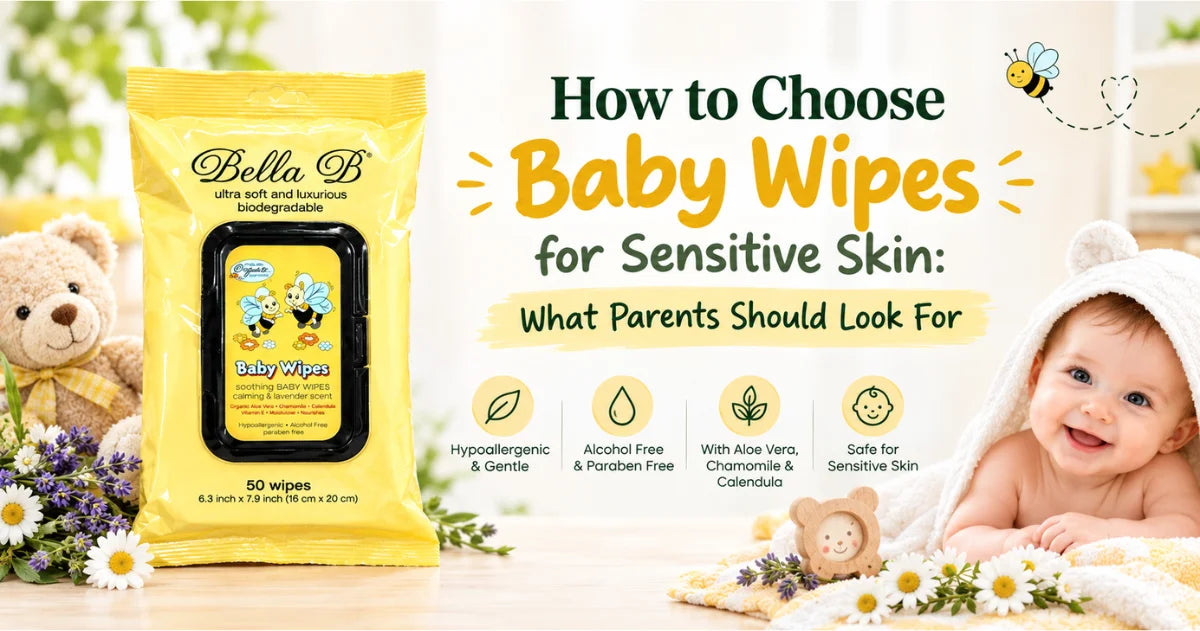
Bella B’s Soothing Baby Diaper Wipes, for example, are designed around a thick, soft texture and a hypoallergenic formula for everyday diaper changes.
Let’s break down what deserves your attention.

Why Can Baby Skin React to Wipes So Easily?
Your baby’s skin isn’t simply adult skin in miniature. The infant skin barrier continues developing after birth, which is one reason gentle cleansing matters so much.
Then consider what happens underneath a diaper. There’s moisture, urine, stool, heat, rubbing, and frequent cleaning. That’s already a pretty busy neighborhood.
The American Academy of Pediatrics recommends cleaning the diaper area gently and choosing wipes that are free from alcohol and fragrance. It also notes that some babies can react to ingredients such as fragrances or preservatives in wipes.
That means redness doesn’t automatically prove that “wipes are bad.” Your baby’s skin may be reacting to a particular formula, repeated friction, prolonged moisture, the diaper itself, or several factors at once.
The goal isn’t to become afraid of the ingredient list. It’s to know what you’re looking at.
What Should You Look for in Baby Wipes for Sensitive Skin?
Here’s my practical checklist. Don’t judge a wipe by one front-of-package claim. Look at the whole product.
1. Start With Fragrance-Free If Skin Is Very Reactive
If your baby’s skin is easily irritated, fragrance-free is one of the simplest places to start.
The American Academy of Dermatology recommends alcohol- and fragrance-free baby wipes when caring for diaper rash. The American Academy of Pediatrics gives similar advice for gentle diaper-area cleaning.
And there’s a small label-reading trap here: “unscented” and “fragrance-free” aren’t necessarily the same thing. The American Academy of Dermatology explains that an unscented product may still contain fragrance used to mask another odor, while fragrance-free means fragrance hasn’t been added for that purpose.
So if your baby’s bottom seems to have an opinion about everything, fragrance-free is a sensible starting point.
2. Look Beyond the Word “Hypoallergenic”
Hypoallergenic wipes for babies can be a sensible option for sensitive skin, but don’t let that single word do all your decision-making.
Turn the pack over. Look at what ingredients are actually used, whether the formula has been developed for sensitive skin, how soft the wipe feels, and how your own baby responds.
Think of “hypoallergenic” as one clue, not a magic force field against irritation.
The same applies to words such as natural, clean, and plant-based. They may tell you something useful about a product, but they don’t automatically tell you whether your baby’s particular skin will tolerate it.
This is the same reason label-reading matters across other baby-care products. Bella B’s guide on choosing baby shampoo for newborns and sensitive skin explains why broad claims should be considered alongside the full formulation.
3. Pay Attention to Texture and Thickness
Ingredients get most of the attention, but the wipe itself matters too.
Imagine cleaning a sticky mess with a thin napkin. You wipe. Then wipe again. Then fold it. Then grab another. Before long, you’ve gone through half the pack, and your baby’s skin has had more rubbing than it wanted.
That’s why thick baby wipes can be useful. A thicker, soft wipe may pick up more mess in fewer passes. Bella B’s Soothing Baby Diaper Wipes are specifically designed with a thick and soft texture for diaper changes and everyday cleanup.
For me, this is an overlooked part of choosing good baby wipes for sensitive skin: you’re not only evaluating what’s in the wipe. You’re evaluating what the wipe does against the skin.
4. Make Sure the Wipe Is Moist Enough to Glide
Too dry and you’re dragging material across delicate skin. Way too wet and cleanup can become its own little swamp situation.
You want enough moisture for the wipe to glide comfortably and loosen residue without aggressive rubbing. This is especially useful during messy diaper changes because repeated wiping creates additional friction on skin that’s already spending most of the day inside a warm diaper.
Gentle beats vigorous here. Your baby is not a kitchen counter.
5. Don’t Assume “More Ingredients” Means Better
Parents often search for the shortest possible ingredient list, and there’s some logic behind wanting simplicity. But water alone doesn’t tell the whole story.
Wet wipes are usually water-based, but a complete formula may also contain mild cleansing ingredients, moisturizing ingredients, and a preservation system that helps keep the product safe during storage and repeated use.
You don’t need to panic because an ingredient has a long chemical-looking name. And you shouldn’t assume a botanical ingredient is automatically gentler just because you recognize the plant.
Instead, look for a thoughtfully formulated wipe without unnecessary extras and pay attention to how it performs on your baby’s skin.
What About Soothing Ingredients?
Some soothing baby wipes include ingredients such as aloe, oat, chamomile, glycerin, or vitamin E. These ingredients may help support skin comfort as part of a well-designed cleansing formula.
Bella B’s wipes, for example, contain organic aloe vera, chamomile, and vitamin E.
QUICK TAKEAWAY
Soothing ingredients should complement a gentle formula, not compensate for an irritating one. A fancy botanical cocktail isn’t much help if you’re still rubbing your baby’s skin with a rough wipe or using a formula that doesn’t agree with them.
Water Wipes vs. Regular Sensitive-Skin Wipes
You may wonder whether the safest choice is simply the wipe with the highest percentage of water. Water-based wipes can be a good option, especially if you’re trying to simplify your baby’s routine. But “99% water” shouldn’t be the only thing you compare.
Even water-rich wipes generally need additional ingredients to cleanse effectively and keep the product usable and stable after the package has been opened.
COMPARE THE WHOLE WIPE
Formula + fragrance + softness + thickness + moisture + your baby’s response.
That’s a much better test than chasing one impressive percentage on the front label.
How Do You Know if Your Baby’s Wipes Aren’t Working for Their Skin?
Sometimes your baby gives you the product review before you’ve finished reading the package. Watch for a pattern of redness after wiping, dryness or rough-looking skin, irritation wherever the wipe is used, repeated rash after using the same product, or obvious discomfort during cleanup.
According to HealthyChildren.org’s diaper-rash guidance, a rash that repeatedly appears wherever a particular product is applied can point to sensitivity to an ingredient. Switching products for a period may help identify the trigger.
Parents discuss exactly this problem online too: a wipe labeled “sensitive” can still bother an individual baby’s skin. That’s why your baby’s response matters more than the marketing language on the package.
If irritation appears, don’t keep using the wipes just because you bought the jumbo box. Your baby’s bottom doesn’t care about your Costco-level commitment.
What Should You Use When the Diaper Area Is Already Irritated?
If the skin is already very red or sore, don’t respond by scrubbing harder to make sure everything is “extra clean.”
The American Academy of Dermatology recommends gentle diaper-area cleaning with water and a soft washcloth or alcohol- and fragrance-free wipes. For severe diaper rash, rinsing with water from a squirt bottle can reduce rubbing, followed by allowing the area to air-dry.
In other words, irritated skin needs less drama. Clean gently. Pat rather than scrub. Give the area time to dry. Change wet or dirty diapers promptly.
Once the skin is clean and dry, a protective diaper-area product can also be part of the routine. Bella B’s Honey Bum Baby Bottom Balm contains zinc oxide and is designed to form a protective barrier against wetness and irritation.
If a rash persists, becomes severe, develops blisters or drainage, or your baby seems unwell or difficult to console, talk with your pediatrician rather than playing diaper-rash detective indefinitely.
Where Bella B Soothing Baby Diaper Wipes Fit In
Once you know what you’re looking for, comparing products becomes much easier.
Bella B’s Soothing Baby Diaper Wipes are designed as thick, soft, hypoallergenic wipes for everyday diaper changes and quick cleanups. They are made without alcohol or parabens and contain organic aloe vera, chamomile, and vitamin E.
That combination addresses two things parents often overlook when choosing diaper wipes for sensitive skin: what’s in the cleansing formula and how the wipe feels during use.
The wipes can also be used for a baby’s hands and face, which is handy because babies somehow manage to become sticky in places you didn’t know could become sticky.
If wipes and diaper-area care are regular shopping-list items in your house, Bella B’s Diapering collection also brings together wipes and other everyday cleanup products.
Still, the same rule applies to Bella B as any other baby product: your baby’s skin gets the final vote. If something causes irritation, discontinue use and reassess.
A Simple Sensitive-Skin Wipe Checklist
Standing in the aisle and don’t feel like conducting a miniature chemistry lesson? Remember this:
- ✓ Gentle formula
- ✓ Soft texture
- ✓ Thick enough for efficient cleanup
- ✓ Moist enough to glide
- ✓ Minimal unnecessary rubbing
- ✓ For highly reactive skin, consider fragrance-free
Then watch your baby. A wipe can have lovely packaging and a mile-long list of claims, but if your baby’s skin repeatedly looks angry afterward, it isn’t the right wipe for your family.
Choosing baby wipes for sensitive skin is less about finding one universally “best” wipe and more about finding a gentle, effective option that your baby’s skin actually tolerates.
And once you find that one? Stock the diaper bag, changing table, car, stroller, and probably three places you’ll completely forget about until six months from now.
