
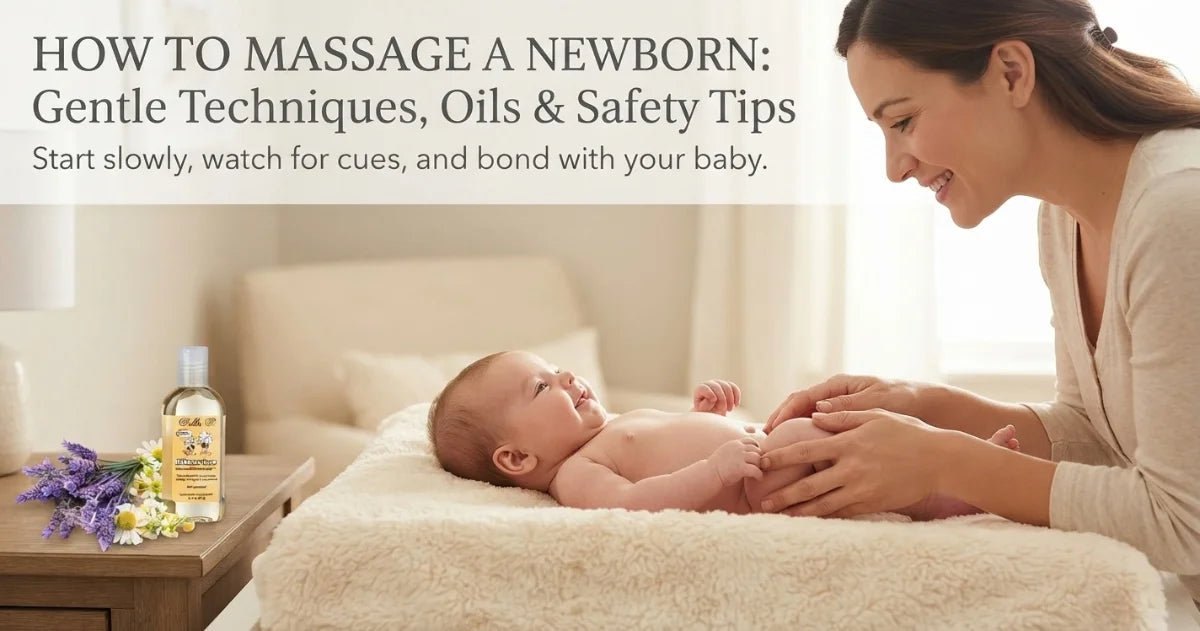
QUICK ANSWERTo massage a newborn, choose a warm, quiet space when your baby is awake and calm. Start with the legs and feet using slow, gentle strokes, then move to the arms, chest, tummy, and back if your baby stays comfortable. Avoid massaging right after a feeding, use only light pressure, and stop if your baby cries, stiffens, arches, or turns away. |
Learning how to massage a newborn can feel a little intimidating at first. Your baby is tiny, their skin is delicate, and you may wonder whether you're pressing too hard or doing the movements correctly.
The good news is that baby massage does not need a perfect technique.
Start slowly, pay attention to your baby's response, and keep the first few sessions short. If you plan to use an oil, a baby-specific option such as Bella B Baby Massage Oil can help your hands glide more easily without needing much product.
Here is how to get started safely.
When Can You Start Massaging a Newborn?
Gentle touch and skin-to-skin contact can begin early, but newborn skin is still developing.
There is no single age that works for every baby. If your baby was premature, has eczema, broken or irritated skin, or another medical condition, speak with your pediatrician before introducing massage oils or starting a regular massage routine.
Age matters, but your baby's mood matters too.
Massage usually works best when your baby is:
- awake and calm
- warm and comfortable
- not hungry
- not overtired
- not immediately finished with a feeding
Avoid massaging directly after a feed, especially if you plan to touch the tummy. The American Academy of Pediatrics recommends giving your baby some time to digest before beginning a colic-relief massage.
Before You Start: Timing, Room and Baby Cues
Choose a warm room and place your baby on a clean towel or blanket on a firm, safe surface.
Keep a diaper, clothes, and anything else you need within reach so you do not have to leave your baby unattended.
Remove rings or bracelets that could scratch the skin and warm your hands before you begin.
You can start by resting your hands gently on your baby's legs for a few seconds. This gives them time to adjust to your touch.
|
BABY CUES: KEEP GOING OR STOP?
|
You do not have to finish the whole massage. A few calm minutes are enough.
How to Massage a Newborn Step by Step
When you're learning how to massage a baby, the legs are usually the easiest place to start.
1. Start With the Legs and Feet
Cup your baby's thigh gently between your hands.
Slowly glide your hands from the thigh toward the ankle using smooth, even strokes. Repeat a few times, then move to the other leg.
For the feet, support the ankle with one hand and use your thumb to make small strokes across the sole. You can also gently touch each toe without pulling or stretching it.
2. Massage the Arms and Hands
Support one arm and gently move your hand from the shoulder toward the wrist. Use your thumb to softly rub the palm.
Newborn hands often stay curled into tiny fists. Do not force the fingers open. Let your baby's hand relax naturally.
3. Massage the Chest
Place both hands near the center of your baby's chest. Move them gently outward toward the shoulders in a slow sweeping motion.
Avoid pressing on the breastbone or ribs. The movement should stay light and controlled.
4. Massage the Back
If your baby is awake and comfortable during tummy time, you can massage the back while staying right beside them.
Use the flat part of your hand to make slow strokes from the shoulders toward the lower back. You can also make small circles on either side of the spine.
Do not press directly on the spine.
|
SAFE SLEEP NOTE Tummy positioning is only for awake, supervised time. When your baby is ready to sleep, follow American Academy of Pediatrics safe-sleep guidance and place your baby on their back on a firm, flat sleep surface. |
5. Massage the Head and Face
Some babies enjoy gentle face and scalp massage. Others do not.
If your baby seems comfortable, use your fingertips to make very light strokes across the forehead, cheeks, and jaw. You can also gently stroke the scalp, avoiding pressure around the soft spot.
If your baby keeps turning away, skip this part.
How Much Pressure Should You Use?
One of the most common worries parents have is pressing too hard.
Your touch should feel gentle but steady. Very light, tickly fingers can sometimes irritate a baby more than a calm hand resting securely on the skin.
The American Academy of Pediatrics recommends gentle, consistent pressure while paying attention to your baby's response.
You should never knead, squeeze deeply, or press into the muscles the way you might during an adult massage. If your baby looks uncomfortable, use less pressure or stop.
How to Do a Newborn Tummy Massage for Gas
A newborn tummy massage can sometimes help when your baby seems uncomfortable from trapped gas.
Wait until your baby's stomach is not full before touching the abdomen.
Lay your baby comfortably on their back and place your fingertips gently on the tummy. Use slow, clockwise circles around the belly. You can also move the legs in a gentle bicycle motion by slowly bringing one knee toward the tummy while extending the other.
Another common infant belly massage technique is the "I Love You" pattern, where your fingers follow the general direction of the large intestine across the abdomen.
Keep the pressure light. Massage may help some babies pass gas, but it is not a treatment for persistent colic, constipation, vomiting, or abdominal pain.
|
CALL YOUR PEDIATRICIAN IF YOUR BABY HAS:
|
What Should You Use for Newborn Massage?
You do not need oil to massage your baby. Warm, clean hands are enough.
If you prefer a little more glide, choose a product made specifically for babies rather than an adult massage oil or body lotion. Newborn skin can be sensitive, so use a small amount first and watch for irritation. Avoid using massage products on broken, inflamed, or irritated skin. Keep oil away from the eyes, mouth, and nose.
It is also advised that parents not to use adult massage oils or nut-based oils for infant massage.
|
BELLA B PRODUCT TIP Once an oil is appropriate for your baby's routine, Bella B Baby Massage Oil can be used on the legs, arms, tummy, and back to help your hands move smoothly over the skin. Use only as much as you need. |
More oil does not make the massage better. It mostly makes the baby harder to hold. You can also explore Bella B's baby care collection if you're putting together a simple bath and skincare routine.
Can Newborn Massage Help With Sleep?
Massage can be a useful part of a calm bedtime routine, but it will not make every baby sleep longer.
|
A SIMPLE WIND-DOWN ROUTINE Warm bath -> diaper -> short massage -> pajamas -> feeding or cuddling -> sleep |
Keep the room quiet and use slow strokes on the legs, feet, arms, or back. It may help to support relaxation and restful sleep.
Think of newborn massage for sleep as a calming signal rather than a sleep treatment.
When your baby is ready for bed, place them on their back on a firm, flat sleep surface. The AAP's safe-sleep recommendations recommend back sleeping for naps and nighttime sleep.
How Long Should You Massage a Newborn?
Start with three to five minutes. That is enough for a first massage. If your baby stays calm and seems to enjoy it, you can gradually increase the session to around 5 to 15 minutes.
You also do not need to massage your baby every day.
Some days you may do a full massage after bath time. On other days, a minute of gentle foot or leg massage during a diaper change may be all your baby wants.
Follow your baby's response rather than the clock.
When Should You Skip Baby Massage?
- very hungry
- overtired
- sick
- feverish
- upset
- immediately finished with a feeding
- experiencing irritated or broken skin
If your baby was premature, recently had surgery, has a medical condition, or is being treated for a skin problem, ask your pediatrician whether massage is appropriate. Never continue because you feel you need to finish the routine. If your baby has had enough, stop.
A Simple Massage Is Enough
|
KEY TAKEAWAY Your first massage does not need to last ten minutes or follow a perfect sequence. Start with the legs, use gentle strokes, and see how your baby responds. After a few sessions, you will spend less time thinking about technique and more time noticing what your baby actually enjoys. |
