
QUICK ANSWERPregnancy-safe skincare ingredients include hyaluronic acid, glycerin, ceramides, niacinamide, vitamin C, azelaic acid, aloe vera, and several moisturizing plant oils. Retinoids and hydroquinone should generally be avoided. Glycolic acid, lactic acid, topical salicylic acid, and benzoyl peroxide may be suitable in certain formulations, but stronger treatments should be reviewed with your obstetrician or dermatologist. |
Pregnancy can turn an ordinary skincare routine into a source of worry. You pick up a familiar serum, read the label, and suddenly wonder whether every unfamiliar ingredient is a problem.
The reassuring truth is that you probably do not need to replace everything. Most basic cleansers, moisturizers, and body lotions can remain in your routine. The priority is to identify ingredients that should be stopped, review stronger active treatments, and keep everything else gentle.
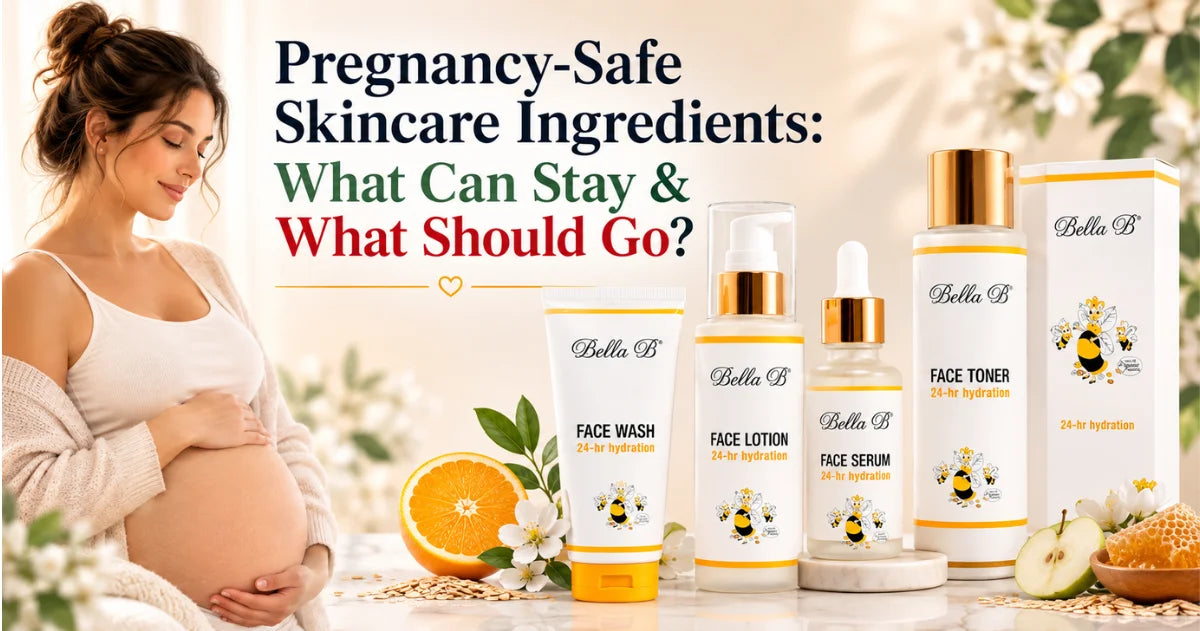
If you want an easier starting point, browse a dedicated pregnancy-safe skincare range. You should still check individual labels, especially if you have allergies or a diagnosed skin condition, but a focused collection can reduce the guesswork.
What Does “Pregnancy Safe” Really Mean?
There is limited clinical research involving skincare ingredients and pregnant women. For ethical reasons, researchers cannot deliberately expose expectant mothers to substances that might cause harm.
Recommendations instead draw on medication data, reported exposures, animal studies, ingredient absorption, and established clinical experience. A review available through the National Library of Medicine notes that most topical skincare products have limited absorption, although certain ingredients still warrant avoidance.
|
CONTEXT MATTERS Strength, application area, and product type affect how a product should be assessed. A mild acid in a rinse-off cleanser is different from a professional peel, just as a spot treatment is different from a lotion applied across the body. |
The Pregnancy-Safe Ingredients Worth Knowing
You do not need to memorize an entire cosmetic dictionary. Start with the ingredients most likely to appear in your daily products.
|
Ingredient |
Best suited to |
What to know |
|
Hyaluronic acid |
Dehydration and tightness |
Attracts water to the skin. Follow with moisturizer to reduce moisture loss. |
|
Glycerin |
Everyday hydration |
Helps the outer layer of skin hold water and works in cleansers, creams, and lotions. |
|
Ceramides |
Barrier support |
Help reduce moisture loss and protect dry or sensitive skin from irritants. |
|
Niacinamide |
Redness, oil, uneven tone |
Supports the barrier. Moderate concentrations may suit reactive skin better. |
|
Vitamin C |
Dullness and pigmentation |
Provides antioxidant support. Start gently if your skin has become reactive. |
|
Azelaic acid |
Breakouts, redness, melasma |
An ACOG-listed OTC option for pregnancy acne. Ask about the right formula for you. |
|
Aloe vera |
Soothing hydration |
Can calm dry skin, but the complete formula still needs to be checked. |
The American College of Obstetricians and Gynecologists includes azelaic acid among the over-the-counter ingredients that can be used for acne during pregnancy.
Moisturizing Ingredients and Natural Oils for the Body
As the skin stretches, the abdomen, breasts, hips, and thighs may feel dry, tight, or itchy. A pregnancy-safe body lotion can make these changes more comfortable.
|
Ingredient role |
Examples |
Why it helps |
|
Humectants |
Glycerin, hyaluronic acid |
Draw water into the outer layer of skin |
|
Barrier lipids |
Ceramides, squalane |
Help limit moisture loss |
|
Rich emollients |
Shea butter, cocoa butter |
Soften dry areas and add comfort |
|
Gentle oils |
Jojoba oil, sunflower oil |
Support softness and complement barrier-focused formulas |
|
Soothing ingredient |
Colloidal oatmeal |
Helps calm dry, uncomfortable skin |
|
NATURAL DOES NOT MEAN RISK-FREE Essential oils and botanical extracts can still cause irritation or allergic reactions. “Non-toxic pregnancy skincare” is a marketing phrase, not a standardized medical category. |
If you want to develop a regular body-care habit, this guide explains when to start using stretch mark cream during pregnancy and how the routine may change across the trimesters.
Moisturizers can make stretching skin feel softer, but no cream can promise complete stretch mark prevention. A Cochrane review found no high-quality evidence that topical preparations reliably prevent pregnancy stretch marks.
Newer marks may look red or purple, while older ones often become pale or silvery. Read about the different types of stretch marks to understand what those colors and stages mean.
A Pregnancy-Safe Collection for Face and Body Care
|
MAKE THE ROUTINE EASIER Bella B Naturals’ Pregnancy Safe Skincare brings facial, moisturizing, body, and stretch mark care together. It can help you build a coordinated routine without combining unrelated products that may be too harsh when layered. |
If you use prescription skincare or have eczema, severe acne, psoriasis, or another diagnosed condition, ask your healthcare professional before changing your treatment plan.
Skincare Ingredients to Avoid During Pregnancy
|
Ingredient or treatment |
Action |
Key point |
|
Retinoids |
Avoid |
Retinol, retinal, retinaldehyde, retinyl palmitate, retinyl acetate, tretinoin, adapalene, tazarotene, isotretinoin |
|
Hydroquinone |
Avoid |
Used for melasma and dark spots. Generally paused because comparatively high absorption is possible. |
|
Prescription treatments |
Review |
Some acne, eczema, and psoriasis medicines may need adjustment. Do not stop necessary treatment on your own. |
|
WHY ARE RETINOIDS TREATED DIFFERENTLY Oral isotretinoin can cause serious birth defects. Topical absorption is considerably lower, but the American Academy of Dermatology and MotherToBaby recommend avoiding topical retinoids during pregnancy as a precaution. |
When hydroquinone is paused, azelaic acid, vitamin C, and daily sun protection are commonly considered as alternatives.
Can You Use Glycolic Acid, Lactic Acid or Salicylic Acid?
These ingredients often appear on blanket “avoid” lists, but the guidance is more nuanced. ACOG lists topical salicylic acid and glycolic acid among the over-the-counter options that can be used for pregnancy acne. The AAD recommends limiting high-dose salicylic acid, particularly concentrations above 2 percent.
|
Active |
Practical status |
How to think about it |
|
Glycolic acid |
Context-dependent |
A mild daily product is not equivalent to a professional peel. |
|
Lactic acid |
Context-dependent |
Lower-strength skincare differs from intensive exfoliating treatment. |
|
Salicylic acid |
Use thoughtfully |
Rinse-off use on a small area creates less exposure than concentrated leave-on use. |
|
LISTEN TO YOUR SKIN If an exfoliant burns, causes persistent redness, or leaves your skin unusually dry, stop using it. Irritation is not evidence that a product is working more effectively. |
A Manageable Pregnancy Skin Care Routine
A pregnancy skincare routine can remain short while still addressing common concerns.
|
MORNING |
EVENING |
|
1 Cleanse with a mild, fragrance-free face wash. 2 Apply one suitable serum, such as vitamin C, niacinamide, or azelaic acid. 3 Follow with a pregnancy-safe moisturizer. 4 Apply broad-spectrum sunscreen with SPF 30 or higher. |
1 Remove makeup and sunscreen with a gentle cleanser. 2 Apply an approved treatment for your main concern. 3 Finish with a moisturizing face cream. 4 Use body lotion wherever skin feels dry or tight. |
Mineral sunscreens containing zinc oxide or titanium dioxide are a conservative choice. The U.S. Food and Drug Administration has found sufficient safety data to propose both ingredients as generally recognized as safe and effective for sunscreen use.
A tinted mineral formula containing iron oxides may provide additional visible-light protection for melasma-prone skin. Introduce one new active at a time so you can identify the cause if irritation develops.
How to Check a Skincare Label Without Overthinking It
Marketing claims such as “clean,” “natural,” and “pregnancy-friendly” should not replace the ingredient list.
- Check whether the formula contains a retinoid.
- Confirm whether it is cosmetic or prescription.
- Look for the concentration of active ingredients.
- Notice whether the product is rinsed away or left on the skin.
- Consider whether it will cover a small or extensive area.
- Avoid fragrance if it has irritated your skin before.
PATCH TEST FIRSTHormonal changes can make skin react differently, even to products you have used before. Test unfamiliar pregnancy-safe skincare products on a small area before applying them more widely. |
Used Retinol Before Realizing You Were Pregnant?
TAKE A BREATHStop using the product and contact your obstetrician. Brief topical use does not automatically mean harm has occurred. The recommendation to stop is precautionary, and your healthcare provider can assess the actual exposure. |
Keep the packaging or take a clear photograph of the label. Be ready to share:
- The product and active ingredient
- Its concentration, if listed
- How often do you use it
- Where you applied it
- Approximately when you stopped
When a Skin Change Needs Medical Attention
Contact your maternity care provider if itching is severe, becomes worse at night, affects the palms or soles, or appears without a rash. These can be signs of intrahepatic cholestasis of pregnancy, which requires assessment.
SEEK ADVICE PROMPTLY FORBlistering, a rapidly spreading rash, signs of infection, sudden or pronounced swelling, or a skin condition that is quickly worsening. |
The Bottom Line
Most basic hydration and barrier-care ingredients can remain in your routine during pregnancy. Retinoids and hydroquinone should be paused, while stronger acne treatments, exfoliants, and prescription products deserve individual review.
Focus on what your skin currently needs rather than maintaining every step of your previous regimen. For many people, gentle cleansing, targeted treatment, reliable moisturization, and daily sun protection are enough to keep skin comfortable throughout pregnancy.
