
|
QUICK ANSWER No. You don't need to wash your nipples before breastfeeding. Plain water during your regular shower is enough; soap actually strips the natural oils that keep your skin protected. If you want a quick refresh between feeds (after a workout, after pumping, or when you're out and about), a gentle, breastfeeding-safe wipe is the better middle ground, not soap and water. |
Why This Question Keeps Coming Up
If you've typed "do you need to wash nipples before breastfeeding" into Google at 2 a.m. with a baby on your chest, you're not overthinking it. Every other body-care habit involves washing before contact, so it's a fair question. The short version: your body already has a built-in system for this, and washing before breastfeeding can undo it rather than help it.
Do You Need to Wash Nipples Before Breastfeeding?
Clinically, no. Around your areola are small bumps called Montgomery glands, and they secrete an oil that moisturizes and protects your nipples every day, whether you think about it or not. Health authorities are consistent on this: guidance from Ireland's HSE states plainly that you don't need to wash your breasts before feeds, and water alone during a shower is enough. WebMD's breastfeeding care guidance says the same thing from the other direction: avoid soap on your nipples specifically because it removes the natural lubrication that prevents cracking.
There's also a biological reason not to over-clean: Medela's nipple-care guidance explains that the surface of your breast carries natural bacteria that contribute to your baby's gut microbiome. Scrubbing that away before every feed works against the process, not with it.
Why Over-Washing Backfires
This isn't a "do less work" shortcut. Washing nipples before breastfeeding, especially with soap, dries out skin that's already handling hours of daily friction, and dry skin is generally more prone to cracking. Cracking is uncomfortable and can take longer to heal than intact skin. Frequent washing also disrupts the natural barrier your body built specifically for this job.
If you take one thing from this section, nipple care before breastfeeding is about protecting what's already there, not adding a cleaning step.
Frequent nursing can also leave nipples tender, especially during periods when your baby wants to feed repeatedly within a short window. Learn why this happens in our guide to cluster feeding and sore nipples.
Nipple Hygiene While Breastfeeding: A Realistic Daily Routine
Good breastfeeding hygiene tips don't require a routine overhaul. They just move the effort to where it actually matters:
|
Step |
What to actually do |
|
Hands |
Wash hands, especially after diaper changes or the bathroom, not the breasts. |
|
Shower |
Rinse with water only during your normal shower. No separate nipple-washing step. |
|
Soap & scent |
Skip scented soap, body wash, or lotion anywhere near the nipple and areola. |
|
Nursing pads |
Change as soon as they're damp; trapped moisture invites bacteria and yeast, not lack of washing. |
|
Drying |
Air-dry after feeds when you can, or pat gently instead of rubbing. |
Gentle hygiene is only one part of keeping nipple skin comfortable and intact. Our guide on how to prevent cracked nipples from breastfeeding covers latch, moisture, friction, nursing pads, and other practical prevention steps.
Nipple Care Before Breastfeeding vs. After
This is the part most articles skip: cleaning nipples before breastfeeding and caring for them after breastfeeding are two different jobs, and they call for two different products.
|
Before a Feed |
After a Feed |
|
|
Do you need it? |
No, not for a routine feed |
Optional, for dry or irritated skin |
|
Best product |
Alcohol-free, no-rinse breastfeeding wipe (occasional use) |
Food-grade, plant-based nipple cream |
|
Bella B pick |
Nipple Nurture Butter |
|
|
Rule of thumb |
Water is enough; wipes are for sweat, dust, or being out for hours |
Follow the label; not every cream needs wiping off before nursing |
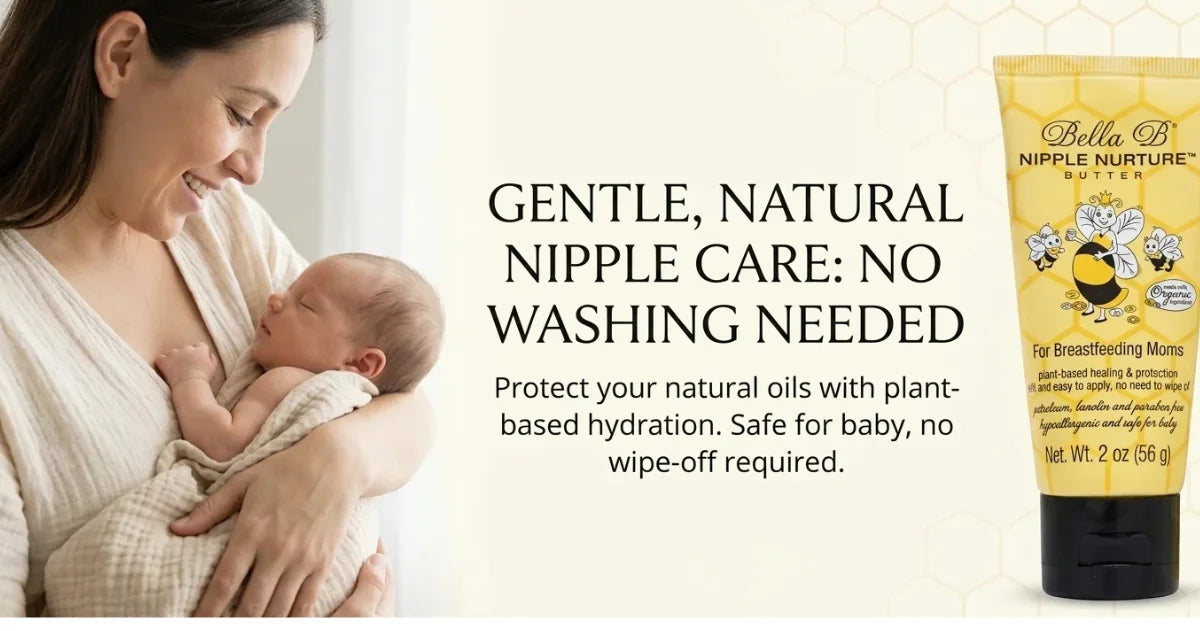
Bella B's Nipple Nurture Butter is formulated for that after-feed layer, plant-based and food-grade, free of lanolin, petroleum, and parabens. If you're weighing it against a lanolin-based balm, the full breakdown is in our nipple butter vs. lanolin comparison.
When Cleaning Nipples Before Breastfeeding Actually Makes Sense
There are a handful of situations where a rinse or a wipe genuinely helps, even though it's not a daily requirement:
- Right after a workout, before your baby's next feed
- After pumping, before you switch to direct nursing
- If you've been out for hours and want a quick refresh before latching
- If there's visible dirt or you've been somewhere unusually dusty or dirty
In these situations, lukewarm water is generally sufficient. When water isn't available, a no-rinse wipe formulated for breastfeeding may be convenient. Soap still isn't the right call, even here.
Nipple Wipes for Breastfeeding: What to Actually Look For
Not every wipe marketed to new moms is meant to go near a latch. Before you toss a pack in your hospital bag or diaper bag, check for:
|
WHAT TO LOOK FOR IN A NIPPLE WIPE
|
Bella B's breast wipes are made with organic aloe vera, without added alcohol or fragrance, and are formulated for use before or after nursing or pumping, without a rinse step.
Nipple Cream: Do You Need to Wipe It Off Before Nursing?
Usually, no, but the label decides this, not the tube. A plain, food-grade nipple cream made specifically for breastfeeding can typically stay on through the next feed. Medicated creams (antifungal, steroid) are a different category entirely, and NIH's LactMed database is a reliable place to check a specific medicated ingredient before use. Treat these like medication and follow your provider's instructions exactly. If you're using a product that isn't labeled for breastfeeding use, don't assume; check first.
Signs Nipple Irritation Needs More Than a Wipe or Cream
Some soreness in the first couple of weeks is common while you and your baby figure out latch and timing. It's not something you're doing wrong. But a few signs mean it's time to loop in a lactation consultant instead of just adjusting your hygiene routine:
|
WHEN TO CALL A LACTATION CONSULTANT
Cream and wipes support comfort; they don't fix a latch problem. |
Nipple care is easier when it forms part of a realistic feeding routine instead of becoming another task to worry about. If you're still finding your rhythm, these breastfeeding tips for first-time moms explain what to expect and how to make the early weeks more manageable.
