
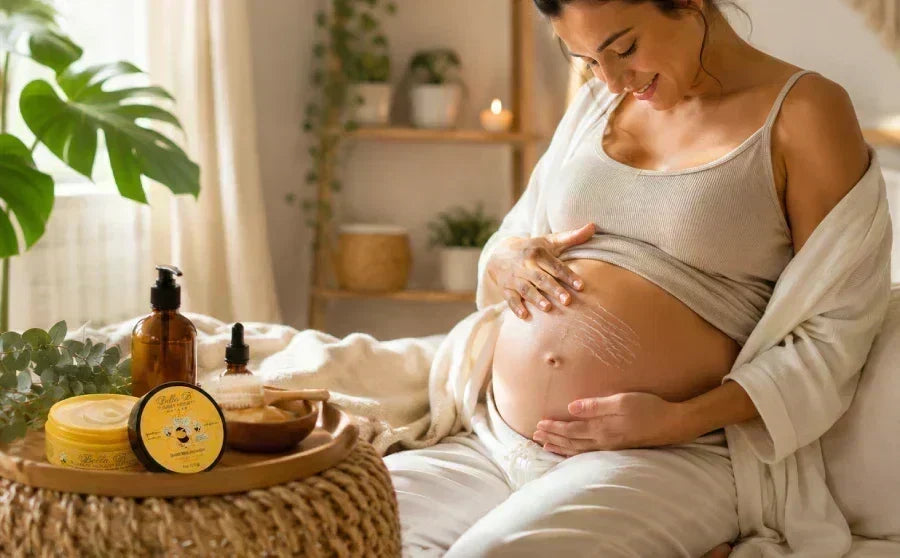
QUICK ANSWER
Pregnancy stretch marks usually fade gradually with time, especially when they are still red or purple. You cannot completely erase them with a cream, but consistent moisturization, gentle massage, pregnancy-safe skincare, and patience can help your skin feel softer and make the marks less noticeable as they mature.
You can go to bed one night with a belly that looks exactly the way it did yesterday and then, seemingly out of nowhere, spot a few reddish lines the next morning.
Belly, hips, thighs, breasts. Pregnancy stretch marks are not particularly picky about where they decide to show up. And if your first reaction is, Okay... how do I get rid of these?, I completely understand.
Here is the part I would rather tell you upfront than bury halfway through the article: there is no stretch mark cream that can completely erase pregnancy stretch marks. They form below the surface of your skin, so any product promising overnight disappearance is making a promise your skin probably cannot keep.
But that does not mean there is nothing you can do.
Fresh stretch marks often become lighter with time, and a simple stretch mark routine can keep stretched skin moisturized and comfortable while that happens. If you're looking for a daily place to start, our Bella B Tummy Honey Butter was made for dry, tight pregnancy skin and has been part of Bella B's pregnancy skincare lineup since 1999.
So let's talk about what actually makes sense for your skin, without turning this into a chemistry class.
First, What Happens to Pregnancy Stretch Marks Over Time?
If your stretch marks are red, pink, or purple right now, they are relatively new. Later, they usually become lighter, flatter, and more silvery or white.
The American Academy of Dermatology explains that stretch marks are permanent in the sense that they do not completely disappear, but they often become much less noticeable with time.
And that's usually what we mean when we talk about trying to fade stretch marks. We want them to stop looking quite so obvious every time we get dressed or catch ourselves in the mirror. That's a much more realistic goal than trying to erase every line.
Your Skin Is Probably Asking for Moisture Before Anything Else
One thing I notice about pregnancy skincare is how quickly we jump to "treatment."
Sometimes your skin is simply saying: Please moisturize me.
As your belly grows, skin can feel dry, itchy, tight, or generally uncomfortable. A rich body moisturizer, stretch mark lotion, cream, or butter can help with that dry, stretched feeling and support the skin barrier.
I like applying moisturizer after a shower while the skin is still slightly damp. You're already standing there, your towel is probably wrapped around you, and the product is within reach. No ten-step ritual required.
Massage it over your belly, hips, thighs, breasts, or anywhere else that feels dry or tight, rather than giving your skin the two-second "I technically moisturized" swipe we all do when we're in a hurry.
Morning and evening are great if that works for you. If twice becomes once because life happened, keep going. A routine you actually follow beats an impressive one you abandon after four days.
You can explore our stretch mark creams if you're putting together a simple pregnancy or postpartum routine.
What Should You Look for in a Stretch Mark Cream?
This is where product labels can become a little ridiculous.
"Miracle." "Erase." "Transform." "Clinically proven."
Meanwhile, you're standing in the skincare aisle thinking, Fine, but can I actually use this while pregnant?
That is the better question.
For pregnancy-safe skincare, I would focus on ingredients that moisturize and support dry, stretched skin rather than chasing dramatic promises.
INGREDIENT | WHY YOU MAY SEE IT IN STRETCH-MARK SKINCARE
Shea butter + cocoa butter | Rich emollients that help soften dry skin.
Aloe vera | Can feel soothing when skin is irritated or itchy.
Hyaluronic acid | Attracts and holds moisture.
Centella asiatica | Has been studied for its potential role in supporting skin structure.
Vitamin E + plant oils | Commonly used to condition skin and support moisture retention.
None of these ingredients needs to be treated like the hero who single-handedly saves the day. What matters more is finding a formula your skin likes and using it consistently.
Bella B takes that moisture-first approach with ingredients such as cocoa butter, shea butter, aloe vera, honey, and plant-based oils. You can see more of our approach to mom and baby care at Bella B Naturals.
And don't judge a stretch mark lotion by how dramatic the front of the jar sounds. Turn it around. Read what's actually inside.
What Should You Avoid During Pregnancy?
"Skincare" does not automatically mean "pregnancy-safe."
Retinoids, including retinol and prescription tretinoin, are generally avoided during pregnancy. The American Academy of Dermatology's pregnancy skincare guidance also recommends avoiding retinoids while pregnant.
So if an old anti-aging body cream has been sitting in your cabinet since before pregnancy, check the label before deciding your belly might enjoy it too.
If you have sensitive skin, allergies, an existing skin condition, or simply aren't sure about an ingredient, ask your OB, midwife, or dermatologist. Pregnancy already gives you enough things to Google at 2 a.m. Your skincare routine doesn't need to become another one.
Does Massaging Stretch Mark Cream Make a Difference?
Instead of quickly rubbing your cream across the skin and immediately pulling on your pajamas, spend a couple of minutes working it in with gentle circular motions.
Think of it less as I'm massaging these stretch marks away and more as giving dry, stretched skin some attention. It helps spread your moisturizer evenly and turns something very ordinary into a small moment of care.
You don't need special tools, an elaborate technique, or a 14-step TikTok routine.
A moisturizer you like, clean hands, and a few minutes are enough.
What About Collagen Boosting and Skin Repair?
Stretch marks develop when rapid stretching affects collagen and elastin in deeper layers of the skin. Naturally, that has created a whole world of products promising to "rebuild collagen."
I'd keep your expectations realistic here too.
Your skin is constantly going through normal skin repair and skin renewal, but no body cream can rebuild a stretch mark back into untouched skin.
You can, however, support normal skin health. Vitamin C is involved in collagen production, while protein provides amino acids the body uses for tissue maintenance. A balanced diet, adequate water, healthy fats, and rest all play their part.
That doesn't mean eating three oranges will suddenly make a stretch mark pack its suitcase.
It simply means skincare isn't only about what comes out of a jar.
Pregnancy Stretch Marks and Postpartum Stretch Marks Feel Different
Pregnancy skincare happens while you're watching your body change. Postpartum skincare can feel different because now you're waiting for it to change again.
Your belly may feel softer. Your skin may look different. Those purple marks might still be sitting there several weeks after delivery, looking like they have absolutely no intention of leaving.
Give them time.
Fresh marks often fade gradually over the following months, so what looks striking now may look very different later. Keep moisturizing if your skin feels dry, but please don't turn skincare into another postpartum deadline.
Your body does not know that Instagram says you should "bounce back" by week six.
Red Stretch Marks vs. White Stretch Marks
Knowing which stage you're looking at can help you set better expectations.
NEWER RED OR PURPLE MARKS
Known as striae rubra, these are at an earlier stage.
OLDER WHITE OR SILVER MARKS
Older marks gradually become pale, silvery, or white and are known as striae alba.
Once marks have matured, a stretch mark cream or lotion is unlikely to dramatically change them. Moisturizers can still keep the skin soft and comfortable, but if older white marks bother you and you want a more visible change, professional treatment may be worth discussing.
Microneedling and certain laser treatments are sometimes used after pregnancy for established stretch marks. A dermatologist can tell you whether those options make sense for your skin.
There is nothing wrong with choosing treatment. There is also nothing wrong with looking at your faded stretch marks one day and deciding you really don't care anymore.
A Stretch Mark Routine You Can Actually Stick With
You really don't need much.
STEP 1: After your shower, apply your stretch mark cream, butter, lotion, or body moisturizer while your skin is slightly damp.
STEP 2: Gently massage it over the areas that feel stretched or dry. Apply again later if your skin needs it.
STEP 3: If you want to exfoliate, keep it gentle. You cannot scrub stretch marks away, and aggressive exfoliation can leave already-sensitive skin irritated.
That's it.
A good stretch mark routine should fit into your life, not become a second job.
If you're currently pregnant and thinking about supporting your skin before more changes happen, you may also find our article on the most effective ways to remove or prevent stretch marks helpful.
And Don't Forget the Boring Things
I know. You came here for stretch marks, and suddenly somebody is telling you to drink water.
But hear me out.
Skin is part of your body, not a separate decorative layer that only responds to skincare products. Regular meals, protein, fruits and vegetables, hydration, movement, and rest all support normal skin function.
Postpartum, that's easier said than done when you're drinking cold coffee at noon while holding a baby who has decided naps are a personal insult.
Do what you can. Keep a water bottle nearby. Eat properly when possible. Moisturize after your shower. Rest when you realistically get the chance.
Think support, not perfection.
So, How Do You Fade Pregnancy Stretch Marks?
Start with realistic expectations.
Pregnancy stretch marks usually soften and fade naturally over time. A pregnancy-safe stretch mark cream or lotion can help keep dry, stretched skin moisturized and comfortable while those changes happen.
If yours are still red or purple, start a simple routine now. If they're already white or silver, you haven't "missed your chance." They've simply reached a different stage, and professional postpartum treatments are available if you eventually want more noticeable cosmetic improvement.
BELLA B REMINDER
You grew a human. Your skin stretched because your body was doing something enormous. You are allowed to want the marks to fade without feeling like you need to hate them first.
