
Quick AnswerNo product can guarantee you will not get stretch marks; prevention depends mostly on genetics and hormones. What actually helps is keeping skin consistently moisturized from early pregnancy onward, which reduces dryness and itching and supports comfort as skin stretches. Cocoa butter, shea butter, and oils soften skin but have not been proven to stop stretch marks from forming. |
If you are wondering how to prevent stretch marks during pregnancy, the honest answer is that no cream, oil, diet, or routine can guarantee prevention. Genetics, hormones, skin structure, and the speed at which your body changes all play a role. However, a consistent pregnancy skincare routine can keep growing skin moisturized, reduce dryness and itching, and help you notice skin changes early. Gradual weight gain within your healthcare provider's recommendations may also reduce avoidable strain on the skin.
Pregnancy changes your body quickly. As your belly grows, the skin around your stomach, hips, thighs, and breasts may feel dry, tight, or itchy. It is natural to look for a stretch mark cream for pregnancy or wonder whether cocoa butter, belly butter, or body oil can stop lines from appearing.
The most useful approach combines realistic expectations with gentle, consistent care. Bella B's stretch mark care includes moisturizers created for pregnancy and postpartum skin. These products can support comfort and softness, but no topical formula should be presented as a guaranteed method of stretch mark prevention.
What Causes Stretch Marks During Pregnancy?
Stretch marks, medically called striae distensae or striae gravidarum during pregnancy, are a type of scar. They form when skin stretches or shrinks rapidly, and the collagen and elastin that support it are disrupted.
New marks may appear pink, red, purple, reddish-brown, or dark brown, depending on your skin tone. Over time, they usually become lighter and less noticeable.
Several factors influence whether they develop:
- Genetics and family history
- Hormonal changes
- The speed and extent of skin stretching
- Pregnancy-related weight gain
- Multiple pregnancy or carrying a larger baby
- Age and individual skin characteristics
Stretch marks are common and harmless. Developing them does not mean you neglected your skin or followed the wrong prenatal skincare routine.
Can You Prevent Stretch Marks During Pregnancy?
|
What the Research Says A Cochrane evidence review found no high-quality evidence that topical preparations reliably prevent stretch marks during pregnancy. The American Academy of Dermatology also explains that many widely promoted home remedies do not appear to prevent or fade them. |
That does not make pregnancy body care pointless. Moisturizing can relieve the dry, tight, itchy feeling that often accompanies stretching skin. A regular routine may also make pregnancy feel more comfortable and give you a few quiet minutes to care for your changing body.
The goal should be healthy, comfortable skin during pregnancy, not a promise that your body will remain completely free of marks.
How to Prevent Stretch Marks: A Realistic Pregnancy Skincare Routine
The following steps cannot guarantee prevention, but they support gentle skin care and reduce unnecessary irritation.
1. Moisturize Before Your Skin Feels Uncomfortable
You do not need to wait until your belly feels itchy or stretch marks appear. Start applying a pregnancy moisturizer when your skin begins to feel dry or tight. Many people begin during the first trimester and continue through pregnancy and postpartum.
Apply moisturizer after a shower or bath while the skin is still slightly damp. This helps reduce water loss from the skin's surface. Focus on areas that commonly stretch, including the belly, hips, thighs, breasts, buttocks, and lower back.
Consistency is more useful than applying a heavy amount occasionally. Once or twice daily may be appropriate, depending on the product directions and how dry your skin feels.
2. Choose Moisturizing Ingredients for Comfort
The best pregnancy lotion is not necessarily the one making the biggest promise. Look for a formula that feels comfortable, suits your skin type, and is easy to use consistently.
|
Ingredient |
What It Does |
|
Cocoa Butter |
Rich emollient that softens dry skin and reduces moisture loss. |
|
Shea Butter |
Supports the skin barrier and relieves rough, tight skin. |
|
Aloe Vera |
Adds lightweight hydration and feels soothing on dry skin. |
|
Jojoba Oil |
Softens skin without feeling as heavy as some oils. |
|
Olive Oil |
An emollient often used in richer pregnancy body-care formulas. |
|
Hyaluronic Acid |
A humectant that draws water toward the skin's surface. |
|
Glycerin |
Helps the skin retain moisture. |
These moisturizing ingredients can improve softness and comfort. They should not be described as proven methods for rebuilding collagen or preventing scar formation.
3. Consider Belly Butter During Pregnancy for Dry, Tight Skin
A belly butter for pregnancy is usually thicker and more occlusive than a standard lotion. This can make it useful at night or in areas that feel especially dry.
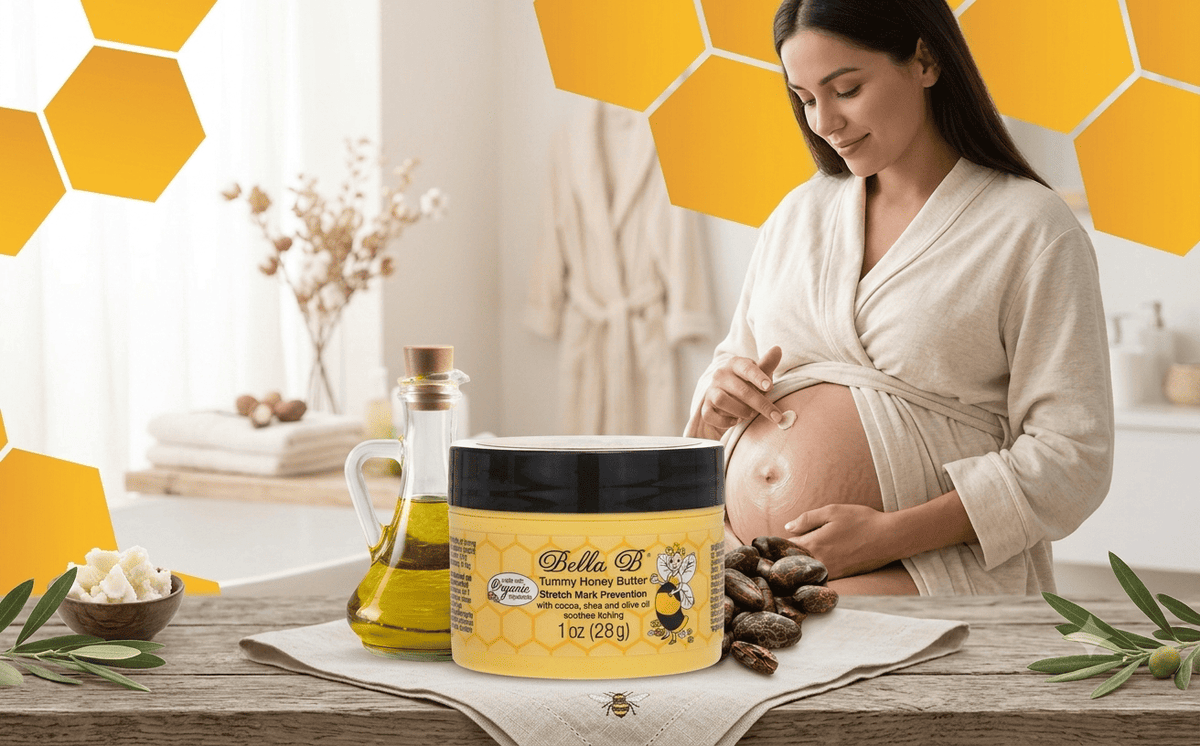
Bella B's Tummy Honey Butter contains cocoa butter, shea butter, olive oil, aloe vera, and jojoba oil in a water-free formula. It is intended to moisturize dry, stretching skin and soothe the tight, itchy feeling that can develop as the belly grows.
Although cocoa butter during pregnancy is popular, research has not shown that cocoa butter alone can reliably prevent stretch marks. Its clearest benefit is rich moisturization.
4. Use a Pregnancy Body Oil if You Prefer a Lighter Routine
A body oil during pregnancy can help seal in moisture, particularly when applied over damp skin or layered over lotion. Oils can also make gentle application easier across the belly, hips, and thighs.
Bella B's Organic Olive Oil Skin Therapy is one option for moisturizing dry areas. As with belly butter and lotion, a body oil can soften skin but cannot guarantee stretch mark prevention.
|
Patch Test First If you have sensitive skin or a nut allergy, read the complete ingredient list. Patch-test unfamiliar products and stop using anything that causes burning, swelling, or persistent redness. |
5. Apply Products Gently
Massage can make a pregnancy skincare routine feel relaxing and help spread the product evenly. Use gentle circular motions without aggressive rubbing or pressure.
There is not strong evidence that massage alone provides enough collagen support to prevent or remove stretch marks. Think of it as a comfortable application method rather than a treatment.
Avoid harsh sugar scrubs, stiff brushes, and frequent exfoliation. Stretch marks form in the deeper layer of the skin, so scrubbing the surface cannot prevent them and may irritate already-sensitive skin.
6. Follow Healthy Pregnancy Weight-Gain Guidance
Rapid skin stretching is associated with stretch marks, but pregnancy is not the time to restrict food or weight gain to avoid them. Follow the weight-gain range recommended by your obstetrician, midwife, or prenatal care professional.
Steady, medically appropriate weight gain may give the skin more time to adjust than sudden changes. However, even someone who stays within the recommended range can develop stretch marks because genetics and hormones remain important factors.
7. Support Hydration During Pregnancy
Regular fluid intake supports overall health during pregnancy, but drinking extra water has not been proven to prevent stretch marks.
For safe hydration during pregnancy, follow your healthcare professional's advice, drink regularly, and increase fluids when heat, activity, or illness requires it. Do not rely on a fixed water target as a skin treatment.
8. Eat for General Skin and Pregnancy Health
A balanced prenatal diet supplies protein, vitamin C, zinc, healthy fats, and other nutrients involved in normal tissue maintenance and collagen production. These nutrients contribute to general health, but no particular food has been shown to stop stretch marks.
Choose a varied diet based on your prenatal care professional's guidance. Supplements should be taken only as recommended because more is not always better during pregnancy.
9. Protect Exposed Skin From the Sun
Sun protection will not prevent stretch marks from forming. However, tanning can increase the contrast between stretch marks and the surrounding skin, making them look more noticeable.
Use protective clothing and a broad-spectrum SPF 30 or higher on exposed skin. Ask your healthcare professional if you have questions about sunscreen ingredients during pregnancy.
Stretch Mark Cream for Pregnancy: What Can It Actually Do?
A pregnancy stretch mark cream is best understood as a targeted moisturizer. Depending on its formula, it may:
|
✓ |
Relieve dryness and tightness |
|
✓ |
Soothe itching caused by stretching skin |
|
✓ |
Support a softer, smoother skin feel |
|
✓ |
Make daily pregnancy body care easier and more enjoyable |
It cannot promise to prevent every stretch mark, erase existing lines, or permanently change the skin's underlying structure.
Bella B's Tummy Honey Cream contains shea butter, aloe vera, honey, and siegesbeckia orientalis. It is a rich moisturizer for areas such as the belly, hips, thighs, and breasts. For a closer look at what topical products can and cannot do, read Does Stretch Mark Cream Work?.
When Should You Start Prenatal Skincare?
There is no medically established week when a moisturizer suddenly begins preventing stretch marks. However, starting early can help you build a consistent routine before the belly becomes larger and the skin feels tight.
Many people begin using a pregnancy moisturizer during the first trimester and continue after delivery as the body gradually changes again. Keep the routine simple: cleanse gently, moisturize damp skin, and reapply to dry areas when needed.
For more guidance, read When to Start Using Stretch Mark Cream During Pregnancy.
Pregnancy Skincare Ingredients to Avoid or Check First
Pregnancy-safe choices depend on the complete formulation, not only the product name. Retinoids, including retinol and prescription tretinoin, should be avoided during pregnancy. Ask your prenatal care professional before using medicated or highly active body products.
|
Caution Be cautious with strong exfoliating acids, concentrated essential oils, products that cause irritation, and unfamiliar herbal extracts. Natural does not automatically mean suitable for pregnancy. |
A Thoughtful Gift for a Pregnant Mom
A moisturizing belly butter, pregnancy lotion, or body oil can be a thoughtful gift for a pregnant mom, especially when presented as a comfort-focused self-care item rather than a promise to keep her body free of marks.
Choose a product with clear ingredients, easy directions, and a texture she is likely to enjoy. Pairing it with a soft robe, water bottle, or handwritten note can make the gift feel personal without putting pressure on how her body should look.
What If Stretch Marks Still Appear?
They may appear even if you moisturize daily, eat well, stay hydrated, and gain weight within the recommended range. That is not a failure. Stretch marks are a normal response to rapid body change and often fade naturally after pregnancy.
If you want to reduce their appearance later, speak with a board-certified dermatologist. Treatments may include prescription tretinoin for suitable newer marks after pregnancy, microneedling, laser treatment, or radiofrequency. Results vary, and retinoids require medical guidance during breastfeeding.
|
Good to Know The Mayo Clinic notes that treatments may improve the appearance of stretch marks, but none work consistently for everyone. |
Final Takeaway
Learning how to prevent stretch marks during pregnancy begins with realistic expectations. No lotion, oil, butter, diet, or supplement can guarantee that they will not appear. What you can do is keep your skin moisturized, avoid irritating routines, follow healthy pregnancy guidance, and treat your changing body with care.
A consistent pregnancy moisturizer or belly butter may relieve dryness, tightness, and itching. If stretch marks still develop, remember that they are common, harmless, and not evidence that you did anything wrong.
