
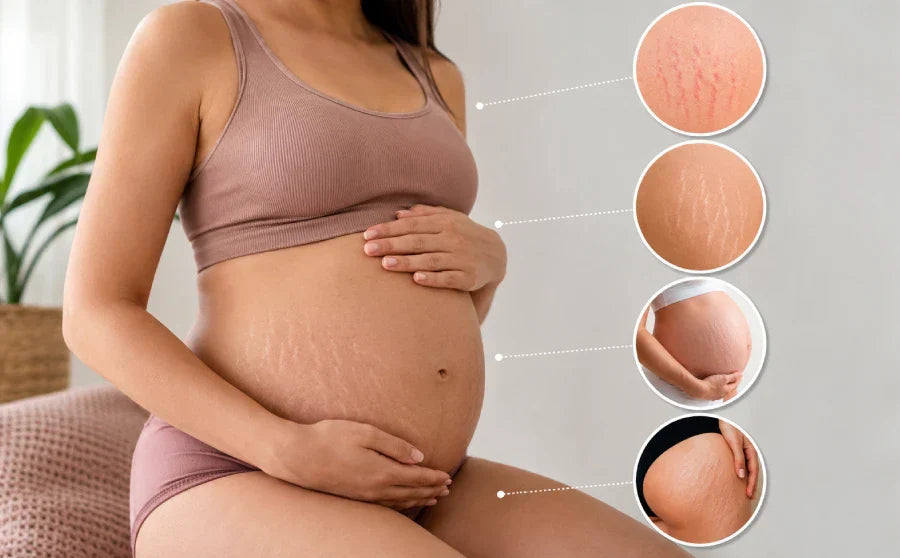
Types of stretch marks are classified by color and stage: red or purple (striae rubrae) are new and most responsive to topical care; white or silver (striae albae) are mature and harder to fade. Other types include pregnancy stretch marks (striae gravidarum), growth-related marks (striae distensae), and steroid- or condition-related marks (striae atrophicans). Earlier care generally gives better results, but no topical can guarantee prevention or removal.
You Noticed Them. Now What?
Maybe you caught them in the mirror after a shower. A few faint lines creeping across your belly, hips, or thighs. Or maybe they've been there a while, silvery streaks you've learned to ignore, but never quite stopped thinking about.
Stretch marks are one of the most universal skin experiences humans share, yet they still manage to feel deeply personal. They show up during some of the most significant chapters of life: pregnancy, puberty, a fitness journey, or simply growing up. And here's the thing: most people who have them don't fully understand what they're looking at, which means they're also not sure what, if anything, can actually help.
That's where knowing your type changes everything.
Different types of stretch marks respond very differently to treatment. What works on a fresh red mark may do little for a long-faded white one. So before you invest in any stretch mark creams, oils, or routines, it's worth understanding what your skin is actually going through.
Let's break it all down.
What Are Stretch Marks, Exactly?
Stretch marks, medically called striae distensae, are a form of dermal scarring. They develop when the skin is stretched faster than its underlying collagen and elastin fibers can keep up with. These fibers, which normally give skin its bounce and elasticity, essentially tear under the pressure, leaving behind the visible marks we see on the surface.
According to the National Institutes of Health (NIH), stretch marks are classified as striae distensae and are among the most common dermatological concerns across all genders and age groups. They're benign; they don't indicate illness, but they can cause real cosmetic and psychological distress, and that's entirely valid.
Hormones also play a significant role. Elevated cortisol levels (during stress, puberty, or pregnancy) reduce the skin's ability to produce collagen efficiently, making stretch marks more likely to form even when the physical stretch isn't extreme.
The 5 Main Types of Stretch Marks
1. Striae Rubrae: Red or Purple Stretch Marks
These are fresh stretch marks, and they're actually the most important ones to catch early.
Striae rubrae appear as raised, red, pink, or deep purple lines on the skin. They may feel slightly itchy or sensitive to the touch. The redness comes from the small blood vessels (capillaries) visible beneath the skin as inflammation is actively happening, essentially, your body's repair process in motion.
Why this matters: This is the stage where topical care is generally considered most useful. The skin is actively remodeling, blood supply is closer to the surface, and ingredients like cocoa butter, shea butter, vitamin E, and centella asiatica may help support hydration and skin comfort during this phase. Research is still evolving, but dermatologists broadly agree that early, consistent moisturization is the most accessible first step.
Common causes: pregnancy (especially third trimester), rapid weight gain, puberty growth spurts, or beginning an intensive weight training program.
2. Striae Albae: White or Silver Stretch Marks
When red stretch marks are left untreated, they mature into striae albae, the faded, silvery-white marks most people think of when they picture stretch marks.
At this stage, the blood vessels have contracted, the inflammation is gone, and the marks have taken on a flatter, sometimes slightly wrinkled texture. The skin here has lost pigment (hypopigmentation), which is why they appear lighter than the surrounding skin or darker on deeper skin tones.
The honest truth: white stretch marks are significantly harder to treat than red ones. The skin's self-repair window has largely closed. That said, consistent deep moisturization can improve texture and make them less visually prominent over time. Retinoids and laser treatments can help, though both have considerations for pregnancy and breastfeeding.
3. Striae Gravidarum: Pregnancy Stretch Marks
These are stretch marks specifically caused by pregnancy, and they're so common they have their own medical name. Studies suggest that anywhere from 50–90% of pregnant women develop them, most commonly during the third trimester when the belly grows fastest.
They tend to appear on the abdomen, breasts, hips, thighs, and lower back, and they often start as striae rubrae before fading post-delivery. Hormonal changes during pregnancy, particularly elevated estrogen and relaxin, make the connective tissue more vulnerable to tearing, even before significant size changes occur.
Timing matters here. Many dermatologists suggest starting a daily moisturization routine early in pregnancy, not as a guaranteed prevention strategy, but because well-hydrated skin may be more comfortable and resilient as it stretches. Curious about when to start using stretch mark cream during pregnancy. Spoiler alert: it's earlier than most people think.
4. Striae Distensae: Growth & Weight-Related Stretch Marks
This is actually the broad medical umbrella term for stretch marks in general, but it's also used specifically to describe marks caused by non-pregnancy rapid stretching, puberty growth spurts, significant weight gain or loss, or rapid muscle building.
Teen girls most commonly develop them on their hips and thighs; teen boys on the shoulders, lower back, and biceps. Athletes who gain muscle mass quickly are also frequently affected. These marks behave similarly to pregnancy stretch marks in their progression from red to white and respond to the same kinds of treatments.
5. Striae Atrophicans: Medical or Steroid-Related Stretch Marks
These are less common, but worth understanding. Striae atrophicans occur when the skin becomes thinned or weakened, either from prolonged use of corticosteroid medications (topical or oral) or from conditions like Cushing's syndrome, Marfan syndrome, or Ehlers-Danlos syndrome that affect connective tissue.
The marks often appear more prominent, have a wrinkled or "empty" texture, and affect areas not typically associated with growth or weight changes. If you're noticing unusual stretch marks without an obvious cause, it's worth a conversation with your dermatologist to rule out any underlying condition.
Does Skin Tone Change How Stretch Marks Look?
Yes, and this is often underrepresented.
On lighter skin tones, stretch marks typically appear red to pink during the active phase, then fade to white or silver. On medium to olive skin tones, they may appear darker, brownish, or purplish during the active phase. On deeper skin tones, two rarer types are more common:
- Striae nigrae — grey or very dark brown stretch marks
- Striae caerulea — bluish-purple stretch marks
The underlying biology is the same, but the visibility and treatment response can vary by skin tone. People with deeper skin tones should also take extra care with treatments that could affect pigmentation, like certain lasers or chemical peels.
Can Stretch Mark Creams Actually Work?
This is the question everyone is really asking, and the answer is nuanced.
For red stretch marks (striae rubrae): This is where topicals are generally considered most useful. Ingredients like hyaluronic acid, centella asiatica, vitamin C, and cocoa butter have emerging research behind their role in supporting skin hydration and elasticity. Results vary by person, genetics, and consistency, but starting early is the most evidence-aligned approach.
For white stretch marks (striae albae): Topicals can improve texture and hydration, but significant fading is harder to achieve. Prescription retinoids (not safe during pregnancy) and professional treatments show better results for mature marks.
If you're wondering whether stretch mark cream works, it’s worth digging into the actual science behind those products; it’s often very different from what the packaging claims. The same goes for the popular belief about cocoa butter for stretch marks; you might be surprised by what the evidence actually says about its effectiveness for your skin.
Keep Stretching Skin Well-Moisturized
The most accessible, low-risk thing you can do for stretching skin, regardless of whether marks appear, is to keep it consistently and deeply moisturized.
If you're pregnant, gaining weight intentionally, going through puberty, or starting a serious training program, your skin is under real pressure. A daily moisturization routine during the red phase, or even before any marks appear, helps keep skin comfortable, supple, and hydrated through the change. It won't guarantee anything, but it's the foundation that most dermatologists recommend as a first step.
The Treatment Window Is Real
Here's something most stretch mark content skips over: the stage your marks are in matters more than what product you use.
Red stretch marks are the moment to be most consistent with topical care. Once marks fade to white, you're dealing with scar tissue, a fundamentally different challenge that often requires professional treatment to address meaningfully.
If you’ve been searching for ways to get rid of stretch marks, you’ve probably wondered if permanent removal is actually possible. It’s a common question, and it’s worth looking at the reality of what professional treatments can and can't do for your skin.
The bottom line: earlier, consistent care generally gives better outcomes than trying to reverse mature marks later.
A Gentle Belly Butter Option for Stretching Pregnancy Skin
If you're pregnant or postpartum and looking for a daily moisturizer formulated with pregnancy-safe, natural ingredients, belly butter for pregnancy is worth knowing about.
Originally created in 1999 for a mom who wanted a clean, non-greasy alternative to petroleum-heavy belly creams, it's made with cocoa butter, shea butter, olive oil, jojoba, and aloe vera, with no water, petroleum, mineral oil, lanolin, or parabens. It's designed to help keep stretching skin moisturized and comfortable during pregnancy, and has been used by many thousands of moms over the years.
Use it daily on your belly, hips, thighs, and breasts, wherever your skin is stretching. It won't promise to erase stretch marks (nothing can guarantee that), but keeping skin well-nourished through rapid change is something you can do something about.
