
|
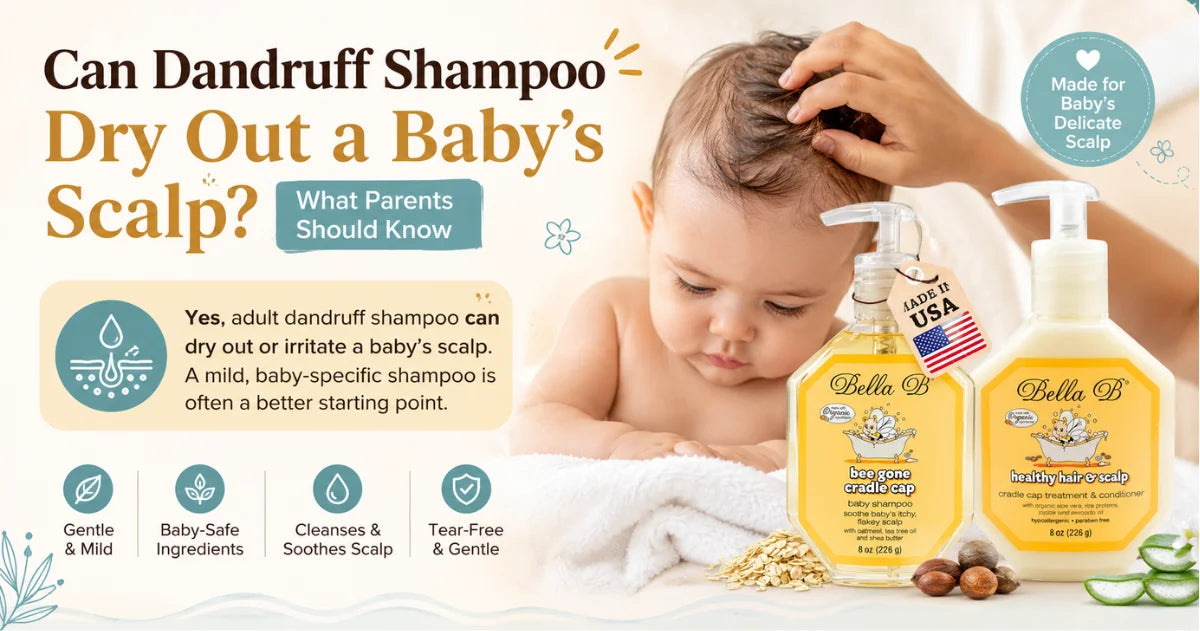
Quick Answer Yes, adult dandruff shampoo can dry out or irritate a baby’s scalp. Medicated ingredients, fragrance, strong cleansing agents, and frequent washing may disrupt the delicate scalp barrier and reduce scalp moisture. Babies with flaky or scaly patches usually have cradle cap rather than adult-type dandruff, so a mild, baby-specific shampoo is generally a better starting point. Ask your pediatrician before using any medicated dandruff treatment on your baby. |
Finding dry, flaky patches on your baby’s scalp can be unsettling. As a mom, your first instinct may be to use the dandruff shampoo that already works for your baby, especially if the flakes look familiar.
However, a baby’s scalp is not simply a smaller version of an adult scalp. Infant skin is more delicate and may react differently to medicated ingredients, fragrance, and intensive cleansing. A product marketed as a dandruff shampoo for dry scalp or an itchy scalp in adults may still be unsuitable for a baby.
This guide explains why dandruff shampoo can cause scalp dryness, how cradle cap differs from dry scalp, and what a gentler Healthy Hair & Scalp care routine looks like for babies. If your baby has visible flakes or cradle cap buildup, Bella B Naturals Cradle Cap Baby Shampoo offers a baby-specific alternative to adult dandruff shampoo. Its gentle formula helps cleanse the scalp and loosen stubborn flakes without relying on the stronger cleansing approach found in many adult products.
Cradle Cap or Dry Scalp? Why the Difference Matters
Most thick, flaky patches on a newborn’s scalp are cradle cap. Also called infantile seborrheic dermatitis, cradle cap commonly appears as greasy, yellowish, or white scales that remain attached to the scalp.
Dry scalp usually produces smaller, powdery scalp flakes. The skin may also look rough or feel tight, particularly after washing or using a new product.
Although cradle cap is related to seborrheic dermatitis, it is not treated in exactly the same way as adult dandruff. Adult dandruff treatment may involve medicated ingredients intended to control yeast, reduce oil, or loosen stubborn scale. Those ingredients may be too intensive for a baby’s sensitive scalp.
According to JohnsHopkins Medicine, cradle cap is not caused by poor hygiene, an allergy, or an infection. Parents should not interpret visible scales as a sign that their baby’s scalp needs stronger or more frequent cleansing.
Can Dandruff Shampoo Cause a Dry Scalp in Babies?
Yes. If you are wondering, “Can dandruff shampoo cause dry scalp?” the answer is particularly important when the product is being considered for an infant.
Adult dandruff shampoos are formulated for mature skin. Using one on a baby may remove too much surface oil, reduce scalp hydration, or cause irritation. Instead of clearing the flakes, the dandruff shampoo may make the scalp dry, red, or uncomfortable.
Several factors can contribute to dandruff shampoo causing dryness in babies.
Medicated ingredients may be unsuitable for infant skin
Adult dandruff shampoos may contain salicylic acid, selenium sulfide, ketoconazole, or other active ingredients. Each serves a specific purpose in adult anti-dandruff treatment, but that does not make it appropriate for an infant.
Johnson Memorial Health advises that dandruff shampoos containing salicylic acid are not recommended for babies because the ingredient can be absorbed through their skin.
Parents may search for an anti-dandruff shampoo for a dry scalp without realizing that “medicated,” “maximum strength,” or “deep cleansing” formulas can introduce unnecessary irritation risks for a baby.
Strong cleansing can reduce scalp moisture
A baby’s scalp needs gentle cleansing, not the complete removal of its natural oils. A strong formula may leave the skin feeling tight and increase scalp dryness.
This can create a confusing situation: cradle cap scales may remain while new, finer flakes appear because the surrounding skin has become dry. It may then look as though the dandruff treatment has made the original problem worse.
Fragrance and cooling ingredients may irritate sensitive skin
Dandruff shampoo side effects are not caused only by active ingredients. Adult products may contain fragrance, preservatives, or cooling ingredients such as menthol.
These additions may be well tolerated by adults but can cause redness, stinging, or scalp inflammation in a sensitive baby. A pleasant scent or cooling feeling is not evidence that a formula is gentle enough for infant skin.
Frequent washing may compound the dryness
Using a strong shampoo more often or leaving it on longer will not necessarily remove cradle cap faster. It can increase exposure to the formula and interfere with the scalp barrier.
When a dandruff shampoo makes the scalp dry, the problem may therefore be a combination of the formula, wash frequency, and contact time rather than one ingredient alone.
Signs a Product May Be Drying or Irritating Your Baby’s Scalp
Dry scalp and cradle cap can overlap, so pay attention to changes that appear after introducing a product. Possible signs of shampoo-related dryness or irritation include:
|
Watch For • Small, powdery flakes replacing thicker, greasy scales • Tight, rough, or cracked-looking skin • Redness around the scalp, hairline, or ears • Increased scalp flakes after repeated washes • Fussiness when the product is applied or rinsed • Flaking that spreads beyond the original patches • Scalp inflammation or visible tenderness |
An itchy scalp is less typical of uncomplicated cradle cap. If your baby appears itchy, distressed, or uncomfortable, the problem may involve irritation or another skin condition and should be discussed with your pediatrician.
Why Adult Dandruff Shampoo Is Not the Best Starting Point
The American Academy of Pediatrics recommends using a mild baby shampoo for cradle cap and consulting a pediatrician before using a medicated shampoo because it may irritate a baby’s skin.
Mayo Clinic similarly recommends gentle washing and loosening the scales carefully rather than immediately starting an adult anti-dandruff treatment.
This distinction matters because a scalp-friendly shampoo for an adult is not automatically safe for a newborn. Even products described as dandruff shampoo for an itchy scalp or dandruff shampoo for dry scalp are developed around adult hair, skin, and treatment needs.
More Flakes After Washing? Here’s What It Could Mean
More flakes after a bath do not always mean your baby’s cradle cap is getting worse, especially when following gentle Cradle Cap Prevention & Healing care.
|
What You Notice |
What It May Suggest |
What to Check |
|
More flakes immediately after washing |
The existing scale has been loosened |
Whether you are massaging gently rather than scrubbing |
|
Fine, dry flakes appear later |
The scalp may be losing moisture |
Formula, water temperature, and wash frequency |
|
The scalp feels tight or looks rough |
The shampoo may be too strong |
Whether the product is intended for babies |
|
Redness appears near the hairline or ears |
Sensitivity or product irritation |
Stop the new product and contact your pediatrician if it persists |
|
Thick scales return quickly |
The normal cradle cap cycle |
Consistency of gentle care rather than shampoo strength |
|
Patches spread, ooze, or become swollen |
Another condition or possible infection |
Pediatric evaluation |
If a dandruff shampoo makes the scalp dry after only a few uses, do not respond by increasing the amount or washing more aggressively.
How Often Should You Wash a Baby’s Scalp?
Wash frequency depends on your baby’s age, skin sensitivity, and the severity of the buildup.
The goal is consistent, gentle cleansing, not daily medicated treatment. Washing too frequently with a strong formula may reduce scalp moisture, while washing too infrequently may allow oil and loosened scale to accumulate.
Parents can review how often baby shampoo should be used for a fuller explanation of how age and scalp condition affect a baby’s routine.
How to Choose a Scalp-Friendly Shampoo for Your Baby
Ignore broad marketing terms for a moment and look at whom the product was actually formulated for. A baby scalp-care formula should ideally:
- Be made specifically for babies or infants
- Clean without aggressive stripping
- Be tear-free and easy to rinse
- Support scalp moisture without leaving heavy residue
- Avoid unnecessary adult medicated ingredients
- Be suitable for a sensitive scalp
- Include clear age and usage instructions
- Help loosen visible flakes through gentle washing
Parents may also want to understand whether baby shampoos are sulfate-free and how different cleansing agents affect the formula.
|
Featured Product Bella B’s Cradle Cap Shampoo and Healthy Hair & Scalp uses oatmeal, organic shea butter, aloe vera, and tea tree oil in a baby-specific formula made to cleanse dry, flaky scalps and visible buildup. It provides a more age-appropriate option than repurposing an adult dandruff shampoo. |
A Gentle Hair and Scalp Care Routine for Cradle Cap
You do not need an intensive routine to care for ordinary cradle cap.
- Wet your baby’s scalp with lukewarm, not hot, water.
- Apply a small amount of mild baby shampoo.
- Massage gently with your fingertips, a soft washcloth, or an infant scalp brush.
- Follow the product’s contact-time directions. Leaving shampoo on longer does not make it work better.
- Rinse thoroughly so no shampoo or loosened scale remains.
- Gently comb away flakes that have already loosened. Do not scratch or pick.
- If the hair feels dry or difficult to manage, apply a lightweight dry scalp conditioner according to its directions.
- Pat the scalp and hair dry instead of rubbing vigorously.
Avoid stacking several products, such as an adult dandruff shampoo, scalp exfoliant, essential oil, and clarifying shampoo, on a baby’s scalp. More products can make it harder to identify what is causing irritation.
What About Oil for Stubborn Scales?
A small amount of mineral oil or petroleum jelly may sometimes be used to soften stubborn scales before washing. The softened buildup should then be removed gently, and the product washed out thoroughly.
Do not leave large amounts of oil sitting on the scalp. Residue can trap buildup and potentially make cradle cap more difficult to manage.
Because recommendations about different natural oils vary, check with your pediatrician before adding one to your baby’s routine.
When to Call Your Pediatrician
Most cradle cap is harmless and improves with time and gentle care. Contact your pediatrician if you notice:
|
Seek Medical Advice If You See • Swelling, bleeding, oozing, or an unpleasant odor • Pus-filled bumps or signs of infection • A rash spreading to the face, neck, or body • Significant redness or scalp inflammation • Apparent pain or persistent itching • A strong reaction after using a new product • No improvement despite consistent gentle care |
Your pediatrician can determine whether the flakes are cradle cap, dry scalp, eczema, contact dermatitis, or another condition. They can also advise whether a medicated dandruff treatment is appropriate.
The Bottom Line
|
Adult dandruff shampoo can cause more dryness when used on a baby’s scalp. Although the flakes may resemble adult dandruff, babies usually have cradle cap and need a gentler approach. Choose a mild, age-appropriate shampoo, wash with lukewarm water, loosen scales without scratching, and protect the scalp barrier by avoiding excessive cleansing. If the scalp becomes red, painful, swollen, or increasingly flaky, stop the product and ask your pediatrician for guidance. |
