
|
QUICK ANSWER Regular baby wipes are made for general skin cleaning, not specifically for nipples that enter a baby's mouth or breast pump parts that touch milk. Can you use baby wipes on nipples? Occasionally, yes, for a quick freshen-up. Are baby wipes safe for breast pump parts? Not as a replacement for washing. Breast pump wipes and pump-specific wipes exist because these two jobs need different tools. |
Baby wipes are always within reach, so reaching for one on your nipple or pump flange feels like the obvious shortcut. The problem isn't that every baby wipe is dangerous.
It's that baby wipes weren't formulated for surfaces that contact a baby's mouth or stored breast milk, and if your nipples are already sore or cracked, using the wrong wipe can slow down healing.
Below: what you can use instead when cleaning is actually necessary, and what to do if you've already used one.
Can You Use Baby Wipes on Nipples?
Short answer: you usually don't need to clean your nipples at all, with or without a wipe. Routine nipple washing before or after feeds isn't necessary for most mothers. Babies are born recognizing their mother's natural scent, and the areola glands (Montgomery glands) produce their own protective, slightly antibacterial oils.
UNICEF's breastfeeding guidance confirms that washing nipples before breastfeeding isn't necessary for this reason. Wiping or washing this away repeatedly can leave skin drier and more irritated, not cleaner.
That said, "Can you use baby wipes on nipples?" is still a fair question, and there are a few honest answers:
- A gentle, fragrance-free wipe used occasionally, after sweating, after a long day, before a pump session in public, is unlikely to cause harm.
- Frequent or daily wiping can strip natural oils and worsen dryness, especially on nipples that are already cracked or tender.
- Fragranced or alcohol-based wipes are best avoided near the nipple altogether, since scent and residue sit close to the baby's nose and mouth.
- "Baby-safe" on the label doesn't mean "made for nipples." A wipe gentle enough for a diaper area isn't automatically designed for a surface a baby will latch onto minutes later.
|
When you might actually need to clean the area: visible dirt or sweat, a topical product whose label says to remove it before feeding, or specific instructions from your doctor or lactation consultant. Outside of those situations, plain water on a soft cloth is usually all that's needed. |
What About Sore, Sensitive, or Cracked Nipples?
Sore and cracked nipples need less product on them, not more. Repeated wiping, even with a mild wipe, adds friction to skin that's already compromised.
If you're dealing with sensitive nipples, the priority is usually fixing what's causing the soreness (latch, positioning, or pump flange fit) rather than finding the "right" wipe to clean them with.
If soreness is tied to frequent cluster feeding sore nipples, the skin needs recovery time between feeds more than it needs cleaning.
A dedicated nipple cream applied after feeds does more for cracked or sensitive skin than any wipe. If you use one, check the label: most breastfeeding-safe nipple creams don't need to be washed off before the next feed. If in doubt, follow the product instructions rather than defaulting to a wipe.
Can You Use Baby Wipes on Breast Pump Parts?
|
No, not as your main cleaning method. Baby wipes on breast pump parts can remove visible milk from a surface, but they can't replace washing the pieces that actually touch your milk. This applies just as much when sore nipples from pumping have you reaching for shortcuts to get through a session faster. |
Here's why cleaning breast pump parts is different from wiping a nipple:
- Breast milk leaves fat and protein residue, not just a visible mess. A flange or valve can look wiped clean while a thin film remains in seams, threads, and small crevices.
- Wipes can't reach pump valves, membranes, and connectors properly. These pieces need to be taken apart, not swiped on the outside.
- Baby wipes aren't formulated, tested, or labeled for milk-contact surfaces. They're built for skin, not feeding equipment.
- Wiping isn't rinsing. Proper cleaning removes soap, milk, and loosened residue with running water, and a wipe leaves it in place.
The FDA is explicit on this point: pump parts that contact breast milk should still be washed with liquid dishwashing soap and warm water before the next pumping session, even if a hygienic wipe was used in between.
How to Clean Breast Pump Parts Properly
Good breast pump hygiene comes down to a simple routine, repeated after every session:
- Wash your hands with soap and water for 20 seconds.
- Disassemble the pump kit and separate every part that touches breast milk: flanges, valves, membranes, connectors, and collection bottles.
- Rinse each piece under running water to remove leftover milk.
- Wash by hand in a dedicated basin with warm, soapy water, or run dishwasher-safe parts through a hot cycle with a heated dry.
- Air-dry fully on a clean towel or drying rack before reassembling or storing. Avoid rubbing parts dry with a cloth.
This level of cleaning matters because pump parts that aren't properly washed can allow bacteria to grow, which has been linked to infant illness in documented cases.
Which Pump Parts Actually Need Washing?
Not every piece of your pump needs the same treatment. Breaking it down by part removes a lot of the guesswork:
|
Pump part |
What it needs |
|
Flanges, valves, membranes, connectors, bottles |
Full wash after every use. These touch milk. |
|
Pump tubing |
Usually doesn't need washing unless milk or moisture gets inside; check for condensation and run the pump briefly to dry it |
|
Motor, buttons, dials, exterior |
Wipe with a disinfecting or alcohol-free wipe; never submerge in water |
|
Wearable pump collection cups and inserts |
Full wash after every use, same as flanges |
|
Wearable pump motor and charging parts |
Wipe only, never submerge |
Baby Wipes vs. Nipple Wipes vs. Breast Pump Wipes
These three products get lumped together, but they're built for different jobs:
|
Product |
Intended surface |
Good for |
Not a substitute for |
|
Baby wipes |
External skin (diaper area) |
Quick external cleanup |
Washing pump parts or routine nipple care |
|
Nipple wipes / breastfeeding wipes |
Breast and nipple skin |
Freshening skin away from home, removing sweat |
Treatment for cracks, soreness, or infection |
|
Breast pump wipes |
Pump exterior and accessories |
Wiping visible milk when a sink isn't available |
Full wash with soap and water |
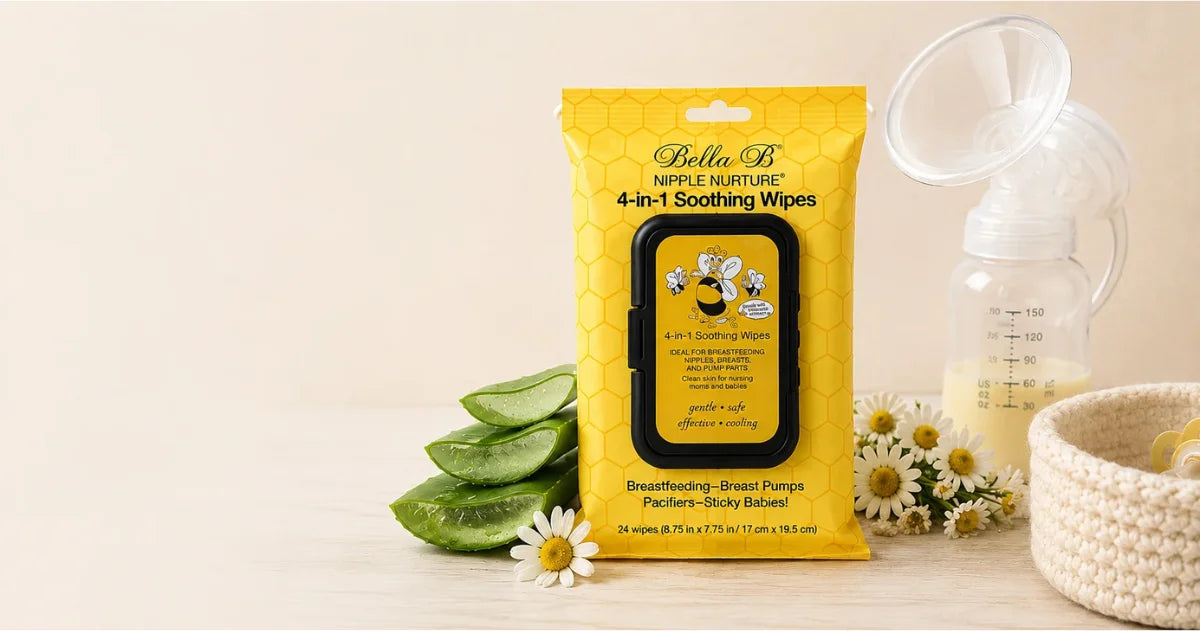
If you want a wipe made for this specific purpose rather than reaching for whatever's in the diaper bag, dedicated breast pump wipes are formulated without the fragrance and stronger cleansing agents found in standard baby wipes.
Cleaning vs. Sanitizing vs. Disinfecting: They're Not the Same
Product labels use these terms loosely, but they mean different things for pump hygiene:
- Wiping removes some visible residue from a surface.
- Cleaning removes milk residue and germs through washing and rinsing.
- Sanitizing further reduces germs after a part has already been cleaned (boiling, steaming, or a dishwasher sanitize cycle).
- Disinfecting kills germs on compatible surfaces, typically the pump exterior rather than milk-contact parts.
A wipe alone checks the first box. It doesn't clean, sanitize, or disinfect on its own.
What If You've Already Used a Baby Wipe?
If you've used a baby wipe on your nipple or a pump part once, that's not an emergency. It doesn't mean your milk is contaminated or that your baby has been harmed.
- On the nipple: rinse gently with water before the next feed if any residue remains. No need to scrub. If skin feels irritated afterward, a thin layer of face cream can help it recover.
- On a pump part: wash it properly with soap and water before you pump again. One wipe-down doesn't require throwing out stored milk from that session.
Going forward, keep a proper wash routine in place rather than defaulting to wipes for pump parts.
Cleaning Pump Parts Without Access to a Sink
Pumping at work or while traveling makes the "wash after every use" rule harder to follow. A few realistic options:
- Pack an extra set of clean pump parts so you're not stuck reusing dirty ones mid-shift.
- Keep used parts sealed in a bag, separate from clean ones, until you reach a sink.
- Use a breast pump wipe made specifically for pump equipment as a temporary bridge, then wash properly as soon as you can.
- Follow your pump manufacturer's specific guidance for your model.
|
The CDC also notes that rinsing and refrigerating pump parts between sessions hasn't been studied as a proven-safe alternative to washing after every use, so treat it as a short-term compromise rather than a routine. |
Choosing the Right Wipe
For nipple or breast care, look for:
- Labeled specifically for nipple or breast use, not general baby skin
- Fragrance-free or very lightly scented
- Alcohol-free wipes, since alcohol dries and irritates already sensitive skin
- Clear instructions on whether rinsing is needed
- Suitable for daily use on sensitive or cracked skin, ideally alongside a nipple cream for ongoing care
For pump accessories, look for:
- Labeled for breast pump or milk-contact equipment
- Able to cut through milk fat residue, not just surface dust
- Compatible with silicone and plastic pump parts
- Clear guidance that it's a supplement to washing, not a replacement
