
QUICK ANSWERSore nipples from pumping are almost always caused by one of three things: a flange that doesn't fit your nipple size and shape, suction set higher than your body needs, or dry, unlubricated skin creating friction against the tunnel wall. A brief pinch or tug in the first 10 to 15 seconds of a session is normal; your tissue is stretching. Pain that continues past the first two minutes, or that lingers after you've stopped pumping, is not normal and usually means the fit, suction, or technique needs adjusting. Most pumping pain resolves within a few days once the actual cause is corrected. |
Why does pumping make your nipples sore? Incorrect flange size, high suction settings, or pumping too frequently are the most common causes of nipple soreness. Using a soothing nipple balm and adjusting your pump settings can help prevent and relieve discomfort.
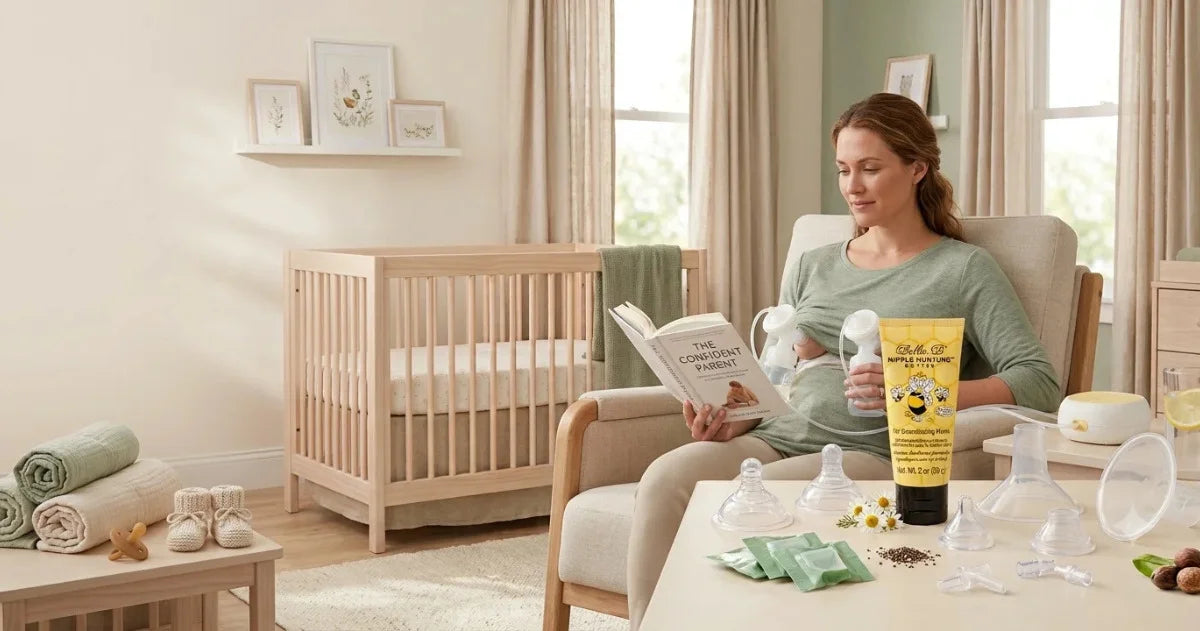
If you're sitting there with the pump running, jaw clenched, wondering why something your body is "supposed" to do feels like this, you are not imagining it, and you are not doing it wrong. Pumping hurts far more often than anyone admits out loud, and the reason is almost never that you simply have sensitive nipples. It's fit, suction, or dryness, in that order of likelihood. Before every session, a lot of exclusively pumping moms reach for Bella B's Nipple Nurture Butter, a lanolin-free, food-grade nipple cream, specifically because it doubles as a gentle lubricant for the flange and never needs to be wiped off before baby feeds. That one small habit change fixes a surprising amount of pumping pain on its own.
Normal Discomfort vs. Pain That Needs Attention
Not all pumping discomfort means something is wrong. Some brief tenderness at the very start of a session, as the collagen fibers in your nipple stretch to accommodate the pump, is expected and usually fades within 10 to 15 seconds. Some women also notice a tingling, "pins and needles" sensation at letdown, which is also normal.
What's not normal is pain that continues after the first couple of minutes, pain that persists once the pump is off, or pain that gets worse from session to session instead of better. That pattern means something mechanical needs fixing, not that you should push through and wait for your nipples to "toughen up." Nipples don't toughen up. Fit and technique are what change.
|
This Is Normal |
This Needs Attention |
|
Brief 10–15 second pinch as the pump starts |
Sharp pain lasting past the first 2 minutes |
|
Tingling or "pins and needles" at letdown |
Pain that continues after the pump is switched off |
|
Mild tenderness in the first 1–2 weeks |
Pain that worsens from session to session |
|
Slight redness that fades within the hour |
Cracking, bleeding, or open skin |
Why Does Pumping Hurt? The Three Most Common Culprits
Pumping hurts nipples for a small handful of predictable reasons, and once you know which one applies to you, the fix is usually fast.
1. Wrong flange size
This is the single biggest cause of sore nipples from pumping. At least half of the women who pump long-term need a different flange size than the one that came with their pump, and most need to size up. If your nipple is roughly the width of a nickel or wider, the stock flange is probably too small for you.
2. Suction set too high
More suction does not equal more milk. It usually just equals more pain. Lactation consultants use the term Maximum Comfort Vacuum: increase suction gradually after milk starts flowing, and the moment it stops feeling comfortable, back it down one notch. Pushing suction higher in hopes of pumping faster almost always backfires, since pain itself can block letdown and reduce your output.
3. Dry, unlubricated skin
Your nipple needs to glide slightly inside the flange tunnel as it's pulled in and released with each cycle. Dry skin can't do that. It drags instead, and that dragging is what produces the raw, burning, "rubbed with sandpaper" feeling by the end of a session, especially in longer sessions or hot, dry weather.
Flange Too Big or Too Small: How to Tell the Difference
A properly fitted flange should leave a small, visible ring of air space around your nipple as it moves back and forth in the tunnel, with only a small amount of areola drawn in alongside it.
|
Signs Your Flange Is Too Small |
Signs Your Flange Is Too Large |
|
Nipple rubs or drags against the tunnel wall |
Too much areola gets pulled into the tunnel |
|
Red ring marks appear after pumping |
Pain feels deep and tuggy, not surface-level |
|
Nipple looks flattened or "lipstick-shaped" |
Breast tissue visibly bulges into the funnel |
Most manufacturer default flanges are sized too large for a first-time pumper, so if something feels off, trust that instinct and try a different size rather than assuming pumping is just supposed to hurt. If you're unsure of your size, a silicone flange insert is a low-cost way to test a smaller fit before buying a new hard flange outright.
Why Does Only One Side Hurt More Than the Other?
This catches a lot of people off guard, especially with hands-free pumping bras. A slight misalignment, where the nipple isn't perfectly centered in the tunnel, can cause considerable one-sided pain even with the correct flange size. Bra tension that's too tight can also pull a flange off-center, and unsupported collection bottles can drag the flange downward mid-session without you noticing.
✓ Visually check that both nipples are centered before turning the pump on.
✓ Loosen your pumping bra if it's pulling one flange off-center.
✓ Re-check alignment about a minute into the session if you're multitasking.
The Cause Everyone Forgets: Worn-Out Pump Parts
Valves and membranes wear out far faster than most people expect, often within a few months of regular use. Worn parts cause suction to become unstable and "chattery" instead of steady, which means you end up pumping longer to get the same output, and that extra friction time is exactly what leads to soreness.
If you've noticed output dropping, sessions taking longer than they used to, or pain increasing even though you haven't changed any settings, replacing the valves and membranes is usually the fastest fix, faster and cheaper than assuming you need a new pump entirely.
How to Make Pumping Less Painful, Session by Session
|
Stage |
Focus |
What to Do |
|
Before |
Fit + lubrication |
Check flange centering and size. Warm the breast for a minute if letdown is slow. Apply coconut oil, olive oil, or a purpose-made nipple cream inside the flange. |
|
During |
Suction + timing |
Stay in letdown mode until milk flows steadily, then drop to a lower cycle speed. Keep sessions to what your body needs rather than pushing past comfort. |
|
After |
Recovery |
Let a little milk air-dry on the nipple. Apply nipple cream for pumping to lock in moisture before the skin dries out and cracks. |
|
A note on safety Most people are ambivalent about whether nipple creams are safe for breastfeeding because they are very cautious about whether it's safe for the baby. It is completely normal to be hesitant, but you can breathe a sigh of relief: modern, food-grade nipple creams are designed to be safe for your little one, so you can focus on comfort rather than concern. |
What's the Best Nipple Cream for Exclusive Pumping?
Skip anything with added fragrance, dyes, or ingredients you'd need to wipe off before your baby's next feed, since that's one extra step you don't need during an already exhausting routine.
If you're weighing lanolin against a plant-based option, Bella B has a full comparison of nipple butter versus lanolin that walks through the safety, purity, and healing differences in more depth, worth reading if you're not sure which to reach for.
Pumping Nipple Pain Relief Between Sessions
A cool, moist compress for a few minutes after pumping can calm inflammation, while a warm compress just before the next session can help milk release come more easily, so you're not tempted to compensate with higher suction. Gentle breast massage before and during pumping can also soften tissue and ease letdown without adding pressure on already tender skin.
A study on nipple pain in breastfeeding mothers published in the International Journal of Environmental Research and Public Health found that fit and technique issues, not "toughness" or how long a mother has been nursing or pumping, are the strongest predictors of ongoing nipple pain. La Leche League points to the same conclusion: positioning and attachment, at the breast or at the flange, are the primary drivers of nipple damage, not individual pain tolerance. That distinction matters because it means the fix is almost always mechanical and fixable, not a sign that something is wrong with you or your body.
When Pumping Pain Signals Mean Something More
A few causes of pumping pain go beyond fit and suction and are worth knowing so you can catch them early.
Vasospasm (Raynaud's phenomenon of the nipple): the nipple turns white, then blue or purple, then red after pumping, often triggered by cold. Clinical research on Raynaud's phenomenon of the nipple confirms it's an under-recognized but treatable cause of pumping and breastfeeding pain, so if this color-change pattern sounds familiar, it's worth naming specifically to your doctor rather than writing off as general sensitivity.
Clogged ducts: a firm, tender lump, sometimes with pain during letdown. Frequent, gentle emptying and warmth before pumping (not aggressive massage) usually resolves it.
Mastitis: breast pain paired with flu-like symptoms, fever, or a red, hot, wedge-shaped area on the breast. This needs a healthcare provider promptly, not a wait-and-see approach.
Thrush: persistent shooting or burning pain, sometimes with shiny or flaky nipple skin, that doesn't improve with flange or suction adjustments. This requires a proper medical diagnosis and treatment, not just a nipple cream.
If pumping pain comes with any of the above, that's the point to call your doctor or a lactation consultant rather than push through it.
A Simple 3-Day Reset If You're Overwhelmed
If the pain has built up and you're not sure where to start, a short reset can help you isolate the cause instead of guessing at everything at once.
|
Day |
Focus |
What to Do |
|
Day 1 |
Reset the basics |
Recheck flange fit and centering. Lower suction to your Maximum Comfort Vacuum. Replace valves and membranes if you haven't recently. |
|
Day 2 |
Reduce friction |
Slightly reduce the length of each session while increasing how often you pump. Use warmth before and coolness after; skip aggressive massage. |
|
Day 3 |
Fine-tune |
Adjust your cycle speed and stay in letdown mode a little longer before switching to expression. Check whether pain trended better, the same, or worse. |
If pain hasn't improved by day three, that's a clear signal to bring in a lactation consultant rather than keep adjusting on your own.
And if this soreness is spilling over into breastfeeding sessions too, our guide on sore or cracked nipples while breastfeeding covers the latch-side causes and healing steps in more depth.
