
Quick AnswerA natural bug repellent for pregnant women should have clearly listed ingredients, straightforward directions, and enough staying power for the situation. Botanical ingredients such as citronella, geranium, cedarwood, and lemon oils may be suitable for everyday outdoor use. If you're camping, dealing with ticks, or traveling somewhere with insect-borne illnesses, use an EPA-registered repellent according to the label. |
You're pregnant, mosquitoes are everywhere, and choosing a bug spray has somehow become another decision that feels far more complicated than it should.
You want to avoid bug bites while pregnant, but you also want to feel at ease with whatever you put on your skin. At Bella B Naturals, we understand why words such as natural, botanical, DEET-free, and pregnancy-safe sound comforting. The trouble is that they don't always tell you how well a product works or whether it's the right fit for your plans.
Let's clear up the confusion so you can choose wisely and get back to enjoying your time outside.
Why Mosquito Bites During Pregnancy Matter
Most mosquito bites are simply irritating. You're left with an itchy bump that usually settles down within a few days.
The greater concern is that mosquitoes and ticks can carry illnesses such as West Nile virus, dengue, Zika, malaria, and Lyme disease. Your actual risk depends on where you live, where you're traveling, and how much time you plan to spend outdoors.
That doesn't mean every bite is a cause for alarm. It simply makes preventing mosquito bites during pregnancy especially worthwhile when you're hiking, camping, traveling, or visiting an area with a known insect-borne illness.
|
When to Call Your Provider Call your healthcare provider if bug bites while pregnant are followed by fever, a spreading rash, severe headache, unusual joint pain, facial swelling, or trouble breathing. |
What Does “Natural Bug Repellent” Really Mean?
A natural or botanical bug repellent usually depends on plant-derived ingredients such as:
- Citronella
- Geranium
- Cedarwood
- Lemon or lemongrass
- Lavender
- Peppermint
- Oil of lemon eucalyptus
Although these ingredients may sound similar, they don't all offer the same degree or length of protection. A plant-based insect repellent may be perfectly reasonable for a quiet evening in the backyard but not substantial enough for tick-heavy woods or travel to a high-risk area.
It's also worth remembering that natural doesn't automatically mean gentle for everyone. Plant oils contain powerful compounds, and intense fragrances may worsen pregnancy-related nausea or headaches. Read the complete ingredient list and test a small amount before using the product more generously.
Natural, DEET-Free, and Pregnancy-Safe Aren't the Same
These descriptions often appear together, but they don't mean the same thing.
|
Label Wording |
What It Actually Tells You |
|
Natural or botanical |
The formula contains plant-derived ingredients |
|
DEET-free |
It doesn't contain DEET, but it may not be natural |
|
EPA-registered |
It has been reviewed for safety and effectiveness when used as directed |
|
Pregnancy-safe |
You should still examine the ingredients and instructions |
According to the CDC, EPA-registered repellents containing DEET, picaridin, IR3535, oil of lemon eucalyptus, PMD, or 2-undecanone are considered safe and effective for pregnant and breastfeeding women when used as directed.
|
Key Takeaway The best mosquito repellent for pregnancy is the one that offers enough protection for where you're going, not simply the one with the most reassuring label. |
Common Ingredients in Botanical Bug Repellent
Citronella
Citronella is one of the most familiar ingredients in natural bug spray. Its distinctive scent may help keep mosquitoes away, although the protection may not last as long as some conventional repellents.
If you're considering citronella during pregnancy, choose a finished product made for skin application. Don't place undiluted citronella essential oil directly on your body.
Citronella candles may be helpful when you're sitting nearby, but their reach is limited. They can't provide even protection across all exposed skin.
Geranium, Cedarwood, and Lemon Oils
These oils are often combined in a natural bug repellent spray for walks, park visits, picnics, and relaxed afternoons in the backyard.
Botanical formulas may need to be reapplied more frequently, so check the directions instead of assuming one quick spray will last until the end of the day.
Oil of Lemon Eucalyptus
Oil of lemon eucalyptus, also known as OLE, is a prepared plant-derived repellent ingredient. It isn't the same as lemon oil, eucalyptus oil, lemongrass oil, or pure lemon eucalyptus essential oil.
The CDC doesn't recommend using pure lemon eucalyptus essential oil as a replacement for an EPA-registered repellent because it hasn't been assessed in the same way.
The names may look almost identical, so take a moment to read the active ingredient rather than relying on the product name alone.
What About Essential Oils During Pregnancy?
There isn't one simple rule for essential oils during pregnancy. The sensible choice depends on the particular oil, its concentration, the complete formula, and how you plan to use it.
A carefully prepared essential oil bug spray is different from applying undiluted oils directly to your skin. If you prefer a natural insect repellent during pregnancy, look for a finished product with:
- A complete ingredient list
- Clear directions for skin application
- Reapplication guidance
- No need for mixing or diluting at home
The same thoughtful approach should guide the rest of your skincare routine. Our guide, Are Pregnancy Stretch Marks Genetic?, explores how genetics, changing skin, and product choices may shape your pregnancy skincare routine.
|
Talk to Your Provider If If you have asthma, eczema, allergies, a high-risk pregnancy, or a history of reacting to fragrances, ask your healthcare provider about the particular formula you're considering. |
Is Homemade Bug Spray a Good Idea?
A homemade natural bug spray may sound appealing. You control the ingredients, avoid unfamiliar additives, and can prepare it in a few minutes.
The drawback is that homemade formulas are difficult to get right. You may not know whether the oils are properly diluted, evenly blended, or strong enough to protect you.
Water and oil naturally separate. As a result, one spray might contain very little essential oil while the next delivers far more than you intended. You may also be uncertain about how long the mixture stays fresh or which insects it can realistically repel.
For consistent application, a ready-made natural bug repellent for skin with clear directions is the more dependable option.
How to Choose a Pregnancy-Safe Bug Repellent
You don't need to scrutinize every label like a scientist. Focus on the details that make a genuine difference.
- Active ingredients; look beyond vague claims such as clean or natural
- Target insects; a mosquito repellent may not offer adequate protection against ticks
- Expected exposure: an hour on the patio is very different from a weekend in the woods
- Reapplication time: botanical products may need to be applied more frequently
- Product format lotions offer greater control, while pump sprays are convenient for skin and clothing
- Fragrant strong scents may feel unpleasant if pregnancy has made you sensitive to smells
Pregnancy may also leave your skin feeling drier, itchier, or more reactive than usual. If you're reconsidering the rest of your routine, read Does Stretch Mark Cream Work? What Moms-to-Be Should Know for practical advice on reviewing pregnancy skincare ingredients and product promises.
A safe mosquito repellent during pregnancy should suit the setting. If mosquitoes or ticks may carry disease, reliable protection should matter more than whether the formula sounds natural.
A Botanical Option for Everyday Outdoor Time
|
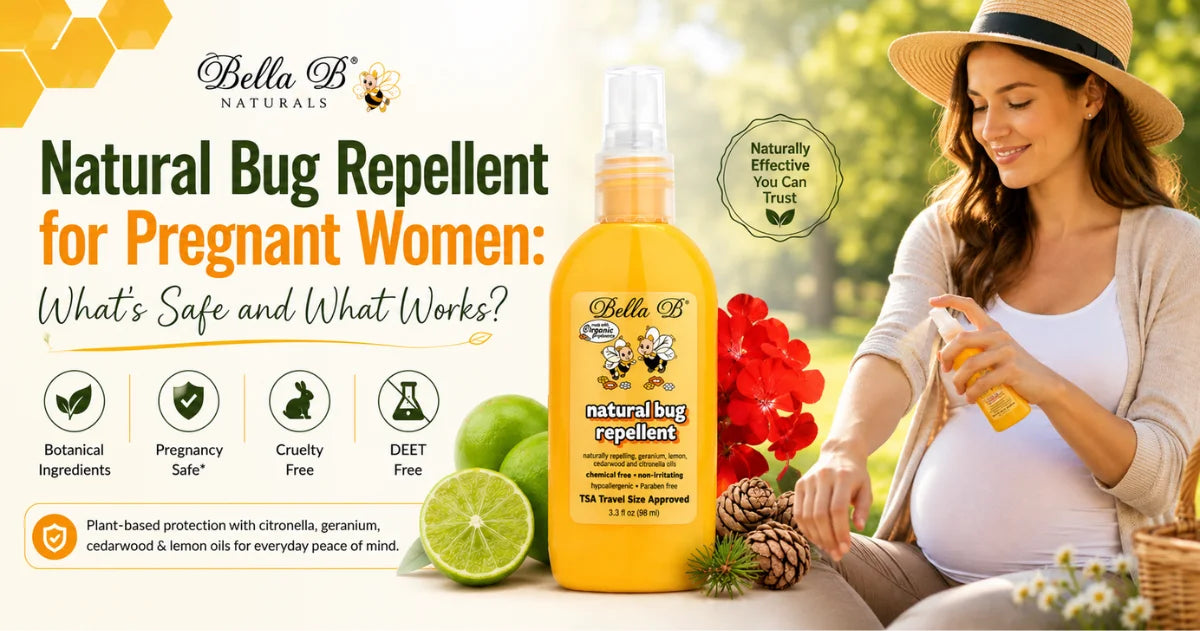
Bella B Pick Buzzy Bee Natural Bug Repellent, for walks, backyard time, park visits, and other everyday outings, this convenient DEET-free option contains geranium, lemon, cedarwood, and citronella oils. The non-sticky formula comes in a TSA-friendly 3.3-ounce bottle, making it easy to tuck into your purse, stroller bag, or travel kit. Bella B also offers a natural bug repellent spray gift set and two-pack bundles, keeping one bottle at home and another in your bag means you're less likely to be caught outside without it. |
If you're pregnant, review the ingredients and speak with your healthcare provider if you're uncertain whether the formula is appropriate for you. For heavy insect activity, tick exposure, or travel to an area with insect-borne illness, follow public-health guidance on EPA-registered repellents.
How to Prevent Mosquito Bites While Pregnant
Repellent is only part of a sensible protection plan:
- Wear loose, lightweight long sleeves and pants
- Choose socks and closed shoes in grassy or wooded areas
- Repair holes in window and door screens
- Remove standing water around your home
- Use an outdoor fan while sitting on the patio
- Check your skin and clothing for ticks after hiking
- Use mosquito netting when appropriate
- Follow travel-health advice for your destination
These steps can also serve as a natural insect repellent for the home by making your surroundings less inviting to mosquitoes without adding another product to your skin.
How to Apply Bug Spray While Pregnant
Whether you choose a botanical formula or another pregnancy-safe insect repellent:
- Read the label before applying it
- Use it only on exposed skin or clothing as directed
- Avoid cuts, rashes, and irritated skin
- Spray it into your hands before applying it to your face
- Use sprays in an open or well-ventilated area
- Wash treated skin after returning indoors
- Reapply only as often as the label recommends
|
Pro Tip If you're also wearing sunscreen, apply the sunscreen first, let it settle, and then apply your bug repellent. |
